Reduce No-Shows: Kilkenny Private Clinic Tech for Consultants
Private consultants in Kilkenny are cutting missed appointments by letting patients manage their own bookings and reminders via secure digital tools.
Researched and written by MedPro's AI pipeline and published automatically — not individually reviewed by a person. Useful as a starting point; check clinical, legal and regulatory details against a primary source before relying on them.

Built in Dublin · GDPR · Early access
MedPro saves Irish clinicians 9–18 hrs every week.
The Cost of Missed Appointments in Kilkenny Specialist Care
Missed appointments in specialist care cost Irish private clinics an average of €250 to €400 per unfulfilled slot. For a consultant urologist operating across facilities like UPMC Aut Even in Kilkenny, a five percent non-attendance rate translates to significant lost revenue, wasted theatre capacity, and critically delayed prostate or haematuria triage pathways. A typical private urology clinic operates on strict margins of time and resources. Theatre slots for day-case procedures and consulting room hours are finite commodities. When a patient fails to attend a scheduled flexible cystoscopy or a transrectal ultrasound (TRUS) guided prostate biopsy, the financial and clinical loss is immediate and largely unrecoverable. Unlike a standard medical review, urological procedures require significant setup, specific equipment sterilisation, and dedicated nursing staff. An empty chair in this environment represents a complex failure in the administrative pathway. According to the HSE National Service Plan (2023), outpatient non-attendance rates across public hospitals have historically hovered around eleven percent. While private specialist clinics generally experience lower 'Did Not Attend' (DNA) rates—typically between four and seven percent—the high fixed costs associated with running private consultant rooms mean that even a marginal DNA rate is highly corrosive to the practice's financial health. To effectively reduce no-shows Kilkenny private clinic directors must first quantify the exact cost of these empty slots over a typical fiscal year. Consider the operational reality of a consultant urologist running multi-insurer clinics across UPMC Aut Even and UPMC Whitfield. If the clinic sees forty patients a week and experiences a five percent non-attendance rate, that equates to two missed appointments weekly. Assuming an average consultation or minor procedure fee of €250, the practice loses €500 a week. Over a standard forty-six-week working year, this single point of friction drains €23,000 from the practice. If those missed slots are high-value procedure slots—such as urodynamics assessments or private vasectomy clinics—the lost revenue compounds significantly. Beyond the immediate financial deficit, missed appointments create severe clinical risks and operational bottlenecks. Urology is a specialty heavily defined by time-sensitive diagnostic pathways. A patient referred via HealthLink with visible haematuria requires prompt assessment to rule out bladder cancer. A patient with a consistently elevated Prostate-Specific Antigen (PSA) requires timely biopsy and follow-up. When these patients fail to attend, the clinical risk remains with the referring practitioner and the consultant until the patient is successfully re-engaged. The medical secretary is then tasked with a manual recall process—drafting letters, making phone calls, and attempting to coordinate a new time slot—which consumes hours of administrative bandwidth that should be directed toward managing current theatre lists. The financial compounding of non-attendance is best understood when broken down by appointment type. The table below illustrates the estimated annual impact of a five percent DNA rate on different urology clinic lists, assuming a standard forty-six-week schedule:| Clinic Type | Avg. Weekly Slots | Weekly DNAs (5%) | Estimated Fee Loss | Annual Revenue Impact |
|---|---|---|---|---|
| Initial Consultation (BPH/PSA) | 30 | 1.5 | €250 | €17,250 |
| Flexible Cystoscopy List | 10 | 0.5 | €450 | €10,350 |
| Vasectomy / Minor Ops | 8 | 0.4 | €500 | €9,200 |
| Total Projected Impact | 48 | 2.4 | - | €36,800 |
 ▶ Watch on YouTube
How Automated Reminders Protect Consultant Schedules
Automated reminders protect consultant schedules by delivering multi-channel prompts directly to patients at strategic intervals before their procedure. This systematic approach reduces non-attendance by up to thirty percent, ensuring high-value theatre slots for TRUS biopsies and flexible cystoscopies remain fully utilised across private hospital sites. The mechanics of patient non-attendance are rarely rooted in deliberate avoidance. The vast majority of DNAs occur due to simple forgetfulness, confusion over the date, or anxiety regarding the procedure itself. By implementing a structured, automated communication cadence, a private practice can address these factors simultaneously. Studies published in the British Medical Journal (2021) demonstrate that systematic text message interventions can reduce missed clinical appointments by over twenty-five percent when compared to cohorts receiving no digital reminders. However, when implementing SMS reminders Kilkenny practice managers often find that generic, one-size-fits-all texts are entirely insufficient for surgical specialties. A urology clinic requires a highly nuanced communication strategy. Reminders in this context are not merely about confirming a date and time; they are critical vehicles for clinical instruction. If a patient arrives for a prostate biopsy having failed to cease their prescribed anticoagulants, the procedure must be cancelled on the spot. This constitutes a highly expensive clinical DNA, despite the patient being physically present. An effective automated system for a consultant urologist must trigger specific instructions based on the appointment type. A standard initial consultation for benign prostatic hyperplasia (BPH) might only require a standard forty-eight-hour confirmation text. Conversely, a scheduled TRUS biopsy requires a seven-day preliminary warning regarding blood thinners, a seventy-two-hour reminder to collect prophylactic antibiotics, and a twenty-four-hour final confirmation. Managing this tiered communication manually places an impossible burden on the medical secretary, inevitably leading to human error and missed communications. While the basic WhatsApp reminders Irish private GP networks sometimes use might suffice for a standard fifteen-minute medical review or a routine vaccination clinic, a consultant urologist requires a highly structured, secure communication protocol that leaves an auditable trail. General practice workflows are generally high-volume and low-acuity regarding pre-appointment preparation. Specialist consultant workflows are lower volume but significantly higher acuity, requiring rigorous adherence to pre-operative protocols. The most effective automated reminder protocols follow a specific, escalating timeline:- T-Minus 7 Days (Preparation Phase): An automated email or secure message detailing pre-procedure requirements. For urology, this often includes explicit instructions on managing existing medications, fasting guidelines for procedures requiring sedation, and directions to the specific hospital campus (e.g., specifying the suite number at the Beacon Hospital or UPMC).
- T-Minus 48 Hours (Confirmation Phase): A direct SMS requesting a firm 'Yes' or 'No' to confirm attendance. If the patient replies 'No', the system immediately flags the slot as available, allowing the medical secretary to offer the cancellation to a patient on the priority waiting list.
- T-Minus 24 Hours (Final Prompt): A brief, non-intrusive text confirming the time and providing a link to clinic directions or parking information. This reduces day-of-appointment phone calls to the secretarial desk from lost patients.
Why Patient-Led Booking is More Effective Than Manual Follow-Ups
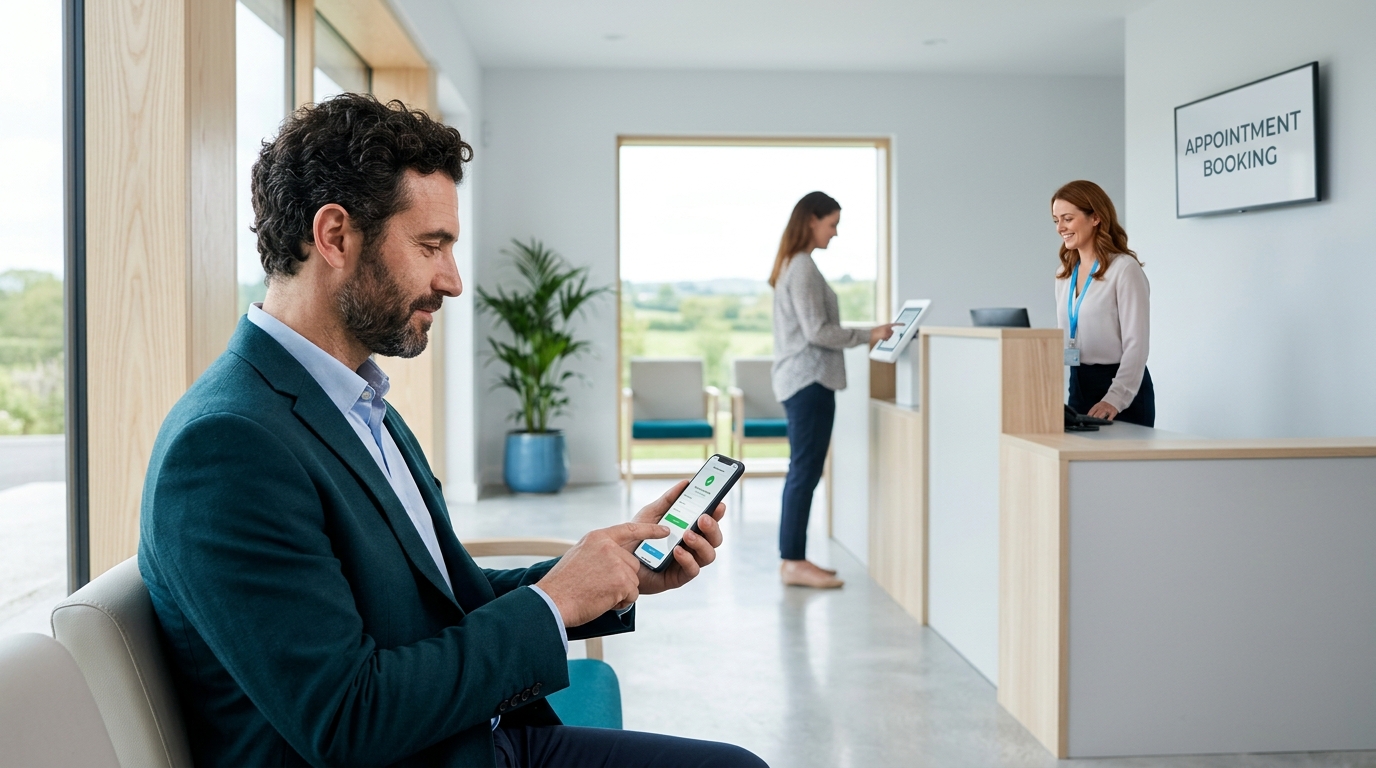
Patient-led booking allows individuals to select, reschedule, or cancel their appointments directly via a secure portal, significantly lowering non-attendance rates. When patients control their scheduling for sensitive urology consultations, they are forty percent more likely to attend or provide adequate notice for the rapid reallocation of the slot. The traditional model of healthcare scheduling is inherently passive for the patient. A referral is generated by a GP, the consultant's secretary receives it, triages it, and eventually calls the patient to assign a date. If the patient misses the call, a voicemail is left. If the voicemail goes unanswered, a letter is posted. This manual latency creates a disconnect between the patient's initial health concern and the eventual appointment. By the time the letter arrives, the patient may have sought care elsewhere, or their symptoms may have temporarily resolved, leading to a high probability of a subsequent no-show. Shifting the administrative locus of control to the patient fundamentally alters their psychological commitment to the appointment. When a patient actively selects a time that fits their work schedule and personal life, the friction that typically leads to non-attendance is removed. This is particularly relevant in urology, where conditions such as erectile dysfunction, urinary incontinence, or male factor infertility carry a degree of stigma. Patients highly value the discretion of booking and managing their care digitally, rather than explaining their availability and condition over a phone call to a busy secretarial desk. This is where dedicated patient-facing applications demonstrate their value in specialist care. Through the MeetBrigid companion app, patients manage the entire pre-clinical administrative process from their smartphones. They can securely book their allocated appointment slots, pay their consultation bill in advance, and complete necessary intake forms before they arrive at the clinic. By granting patients this level of autonomy, the practice indirectly benefits from a drastically reduced administrative burden and a near-zero non-attendance rate. One of the most significant drivers of appointment adherence is financial commitment. When patients utilise a platform to pay their consultation fee upfront or securely hold a card on file, the financial stake virtually eliminates casual DNAs. If a patient knows their card will be charged a cancellation fee for failing to provide twenty-four hours' notice, they are highly motivated to either attend or cancel through the app in sufficient time for the practice to fill the vacancy. Furthermore, patient-led applications streamline the clinical intake process. In urology, specific diagnostic questionnaires are vital for accurate triage. A patient attending for BPH assessment must complete an International Prostate Symptom Score (IPSS). A patient attending a pelvic floor clinic requires detailed bladder diary data. Traditionally, these forms are handed to the patient on a clipboard in the waiting room, consuming valuable consultation time while the consultant waits for the paperwork to be completed. When patients use a secure app to complete these forms at home, the data is ready for the consultant before the patient even enters the room. One MeetBrigid account allows the patient to connect to more than one clinic if they are seeing multiple specialists, and the patient then chooses exactly what to share into each clinic, category by category. This sharing is fully revocable, ensuring the patient remains in absolute control of their health data. Nothing is automatically synced or merged across practices; the patient deliberately grants access to their intake data, reducing duplication of effort while maintaining strict privacy boundaries. To successfully automate patient recall and reduce no-shows Kilkenny private clinic consultants must recognise that modern patients view administrative friction as a barrier to care. A system that requires patients to play phone tag with a secretary between the hours of nine and five is fundamentally incompatible with the demands of modern working life. By adopting patient-led scheduling and digital intake, the clinic ensures that by the time the patient arrives, all administrative, financial, and preliminary clinical data collection is already complete. The consultant can then dedicate the entirety of the allocated slot to high-value medical care, rather than chasing missing paperwork or processing payments.
Implementing GDPR-Compliant Automation in Your Private Practice
Implementing GDPR-compliant automation requires selecting EU-hosted software that encrypts patient data and adheres strictly to Data Protection Commission guidelines. For Irish urologists, this means ensuring all automated communications regarding sensitive conditions maintain strict medical confidentiality while successfully preventing missed appointments and schedule gaps. The transition to automated practice management is not merely a technological upgrade; it is an exercise in rigorous information governance. Medical data is classified as 'special category data' under Article 9 of the General Data Protection Regulation (GDPR), requiring the highest threshold of security and explicit consent. The Irish Data Protection Commission (DPC) Annual Report (2023) repeatedly highlights the healthcare sector as highly vulnerable to breaches, the vast majority of which stem from administrative errors, insecure communication channels, and the improper use of consumer-grade messaging applications. When configuring Kilkenny appointment automation, consultants must balance the operational necessity of reducing DNAs with the legal imperative of data privacy. Sending an unencrypted text message that explicitly names a sensitive procedure (e.g., 'Reminder: Your vasectomy is scheduled for tomorrow at 9 AM') poses a significant privacy risk if the message is displayed on an unlocked phone screen or intercepted. To ensure strict compliance while maintaining operational efficiency, private specialist clinics must adhere to a specific implementation framework:- Verify Data Residency and Hosting: Before adopting any automation software, the practice must verify exactly where the patient data is stored. For Irish clinics, the software must be hosted within the European Union (e.g., AWS Dublin) to comply with data sovereignty laws. Utilising software that routes patient data through servers in the United States or other non-EU jurisdictions without appropriate safeguards is a direct violation of GDPR.
- Enforce the Principle of Data Minimisation: Automated reminders should contain only the minimum necessary information to secure attendance. A compliant SMS reminder will state the date, time, and location (e.g., 'Reminder: Your appointment with Dr Smith at UPMC Aut Even is tomorrow at 14:00. Please reply YES to confirm.') without disclosing the specific medical specialty or the nature of the procedure. Detailed clinical instructions should be gated behind a secure, authenticated patient portal rather than broadcast via standard SMS.
- Establish Explicit Digital Consent: The practice must capture and record explicit consent for automated communications during the initial patient intake phase. The patient must actively opt-in to receive SMS or email reminders, and the software must provide an immediate, automated mechanism for them to withdraw this consent at any time, without requiring manual intervention from the medical secretary.
- Maintain Comprehensive Audit Trails: Every automated action—whether it is an SMS sent, a consent form digitally signed, or an appointment cancelled by the patient—must generate an immutable, time-stamped log. In the event of a HIQA audit or a patient dispute regarding pre-operative instructions, the practice must be able to instantly produce an exact record of what information was delivered and when it was accessed.
Frequently asked questions about reduce no-shows Kilkenny private clinic
How can Kilkenny private clinics reduce patient no-shows?
Private clinics can reduce no-shows by implementing automated reminders and using patient-first platforms that allow patients to reschedule or cancel appointments easily.
Is MeetBrigid a practice management system for consultants?
No, MeetBrigid is a patient-first app that puts patients in control of their own bookings, bills, and results. Any practice-side convenience is a secondary effect of patients managing their own admin.
How does MeetBrigid handle patient data across multiple specialist clinics?
A patient can link one MeetBrigid account to multiple clinics and choose to share specific categories of information, which they can revoke at any time. The platform is GDPR-compliant and EU-hosted.
Frequently Asked Questions
Ready to give Brigid the admin?
Request early access — founding practices are onboarding now. Or book a 30-minute walkthrough with our team to see Brigid run a workflow with your own data.
EU-hosted · GDPR · Founding-partner access · Cancel any time