AI Online Booking Drogheda Clinic: Streamlining Specialist Care in 2026
Private clinics in Drogheda use AI online booking to manage 24/7 appointments, helping busy local specialists eliminate hours of scheduling admin.
Researched and written by MedPro's AI pipeline and published automatically — not individually reviewed by a person. Useful as a starting point; check clinical, legal and regulatory details against a primary source before relying on them.
Built in Dublin · GDPR · Early access
MedPro saves Irish clinicians 9–18 hrs every week.
The Admin Bottleneck: Why Traditional Booking Fails Drogheda Specialists
Traditional booking fails Drogheda specialists because manual telephone triage and paper-based scheduling cannot efficiently process complex referral pathways. This reliance on synchronous communication forces medical secretaries to spend hours managing multi-site consultant diaries, resulting in delayed appointments, increased patient anxiety, and significant administrative overhead for private practices.
For a private urology consultant operating across the North East, the logistical reality of clinical practice is inherently fragmented. A typical week might involve public lists at Our Lady of Lourdes Hospital, private consulting rooms in Drogheda, and surgical theatre sessions at the Mater Private or Beacon Hospital in Dublin. Managing a diary across these disparate locations requires intense administrative coordination. When a referral arrives via HealthLink or secure email, the traditional response involves a medical secretary printing the document, presenting it to the consultant for triage between clinics, and subsequently engaging in prolonged telephone tag to secure a date with the patient.
The cost of this friction is substantial. Practices we consult with consistently report that their administrative staff spend up to three hours per day simply trying to contact patients to confirm bookings, gather insurance details, and explain pre-procedure instructions. This is not merely an inconvenience; it represents a hard cap on clinic capacity. According to the HSE National Service Plan (2024), managing outpatient demand and reducing waiting times requires urgent digital transformation across both public and private pathways. Yet, many private specialist rooms remain tethered to the telephone.
In urology, the stakes of administrative delay are particularly high. A referral for an elevated PSA or macroscopic haematuria carries significant patient anxiety. When a patient waits two weeks just to receive a phone call confirming a consultation date, the clinical experience degrades before they ever step into the waiting room. Furthermore, traditional booking systems fail to capture the nuance of urological pathways. A generic calendar cannot differentiate between a 15-minute routine post-vasectomy check and a 30-minute complex consultation requiring prior authorisation for a flexible cystoscopy. Consequently, secretaries must manually intervene in every single booking, verifying VHI, Laya, or Irish Life policy numbers and ensuring the correct pre-consultation questionnaires are posted out.
This manual bottleneck is the primary driver of medical secretary burnout in Irish specialist practices. Highly skilled administrative staff are reduced to data entry clerks and call centre operators, rather than functioning as true practice managers. To expand capacity without linearly increasing headcount, private consultants must decouple the act of scheduling from synchronous human communication.
 ▶ Watch on YouTube
What is AI-Driven Online Booking for Private Clinics?
AI-driven online booking is an intelligent scheduling system that allows patients to secure consultant appointments based on clinical urgency and predefined triage rules. Instead of simply displaying a calendar, the artificial intelligence evaluates referral data, matches it against the consultant’s specific sub-specialty criteria, and allocates appropriate clinic slots automatically.
It is critical to distinguish an AI online booking Drogheda clinic implementation from a generic commercial scheduling tool. Standard calendar applications, commonly used in allied health or non-clinical sectors, operate on a first-come, first-served basis. They display open slots and allow anyone to book. For a consultant urologist, this model is clinically unsafe and administratively unworkable. A patient presenting with acute renal colic cannot be placed in the same routine queue as a patient seeking a secondary opinion for mild benign prostatic hyperplasia (BPH).
Intelligent scheduling systems operate strictly as a human-in-the-loop architecture. The AI acts as a highly trained administrative assistant, not an autonomous clinical decision-maker. When a GP referral is received, the system can parse the text to identify key clinical indicators—such as a PSA of 8.5 ng/mL or a history of recurrent urinary tract infections. Based on rules established by the consultant, the system drafts a triage category. The consultant or a senior nurse reviews this draft triage on their dashboard and approves it with a single click. Only then does the system generate a secure, single-use booking link sent directly to the patient’s smartphone.
This process ensures that the clinical threshold for consultation is maintained by a human expert, while the mechanical work of finding a mutually agreeable time, collecting demographic data, and issuing appointment reminders is entirely automated. The patient clicks the link, views only the specific clinic sessions appropriate for their triage category (for instance, a dedicated TRUS biopsy list versus a general outpatient clinic), and selects their preferred time.
Furthermore, these systems are designed to handle the specific operational quirks of Irish private healthcare. They can be configured to recognise that a consultant only performs urodynamic studies on Tuesday mornings at a specific private hospital, ensuring that a patient requiring that procedure is never accidentally booked into a standard consulting room in Drogheda on a Thursday afternoon. This rules-based precision is what separates basic digital diaries from true clinical automation.
How Automated Scheduling Resolves the Patient Booking Friction
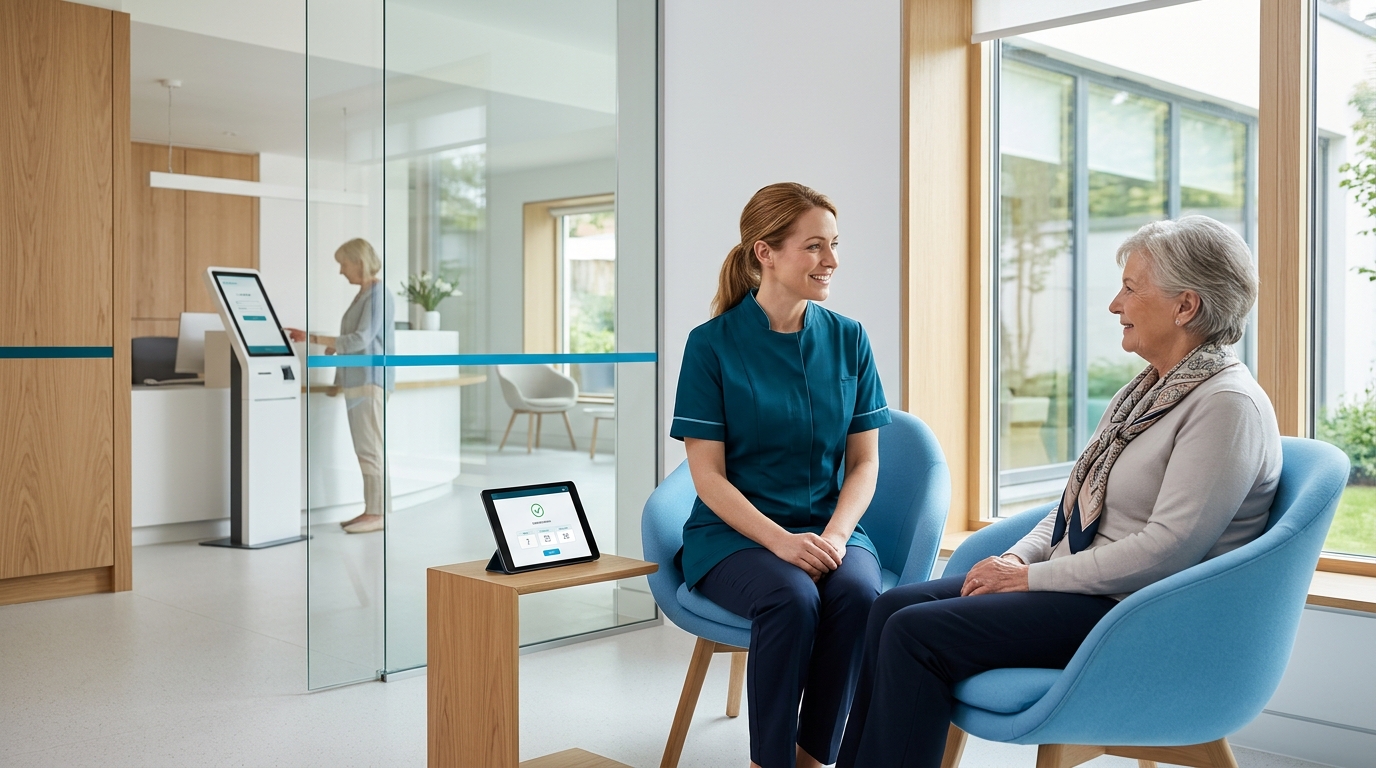
Automated scheduling resolves booking friction by eliminating telephone tag and enabling continuous appointment access for triaged referrals. By digitising the intake process, practices automatically capture essential pre-consultation data, verify insurance details, and drastically reduce the administrative lag between a general practitioner referral and the patient securing a confirmed clinic date.
To understand the practical impact of a private clinic Drogheda booking system, it is useful to examine a specific, high-volume clinical pathway. Haematuria triage is a standard component of any urology practice, demanding swift assessment, specific diagnostics, and meticulous documentation. When managed manually, the administrative friction is considerable.
Consider the traditional manual workflow for a haematuria referral:
- The GP sends a referral via HealthLink.
- The secretary prints the referral and places it in the consultant's physical triage tray.
- The consultant reviews the paper, writes 'Urgent - 2 weeks' in the margin, and returns it.
- The secretary calls the patient. The patient is at work and does not answer an unknown number.
- A voicemail is left. The patient calls back the next day while the secretary is on another call.
- Contact is finally made on day three. The secretary spends 15 minutes taking demographic details, checking Laya Healthcare cover, and explaining the need for a renal ultrasound prior to the visit.
- A paper intake form is posted to the patient, which they often forget to bring to the appointment.
This cycle is inefficient, prone to transcription errors, and deeply frustrating for a patient worried about a potential malignancy. By implementing intelligent automation, the pathway is entirely restructured to prioritise speed and data accuracy.
The automated workflow operates as follows:
- The referral is ingested digitally. The AI flags the keyword 'macroscopic haematuria' and drafts an 'Urgent' triage status.
- The consultant reviews their digital dashboard between theatre cases, confirms the 'Urgent' status, and signs off.
- The system instantly sends an SMS and email to the patient with a secure booking link.
- The patient opens the link at 9:00 PM, selects a convenient slot from the urgent clinic template, and confirms the booking.
- Upon confirmation, the system prompts the patient to enter their insurance details and complete a digital intake form on their device.
The time from consultant triage to confirmed booking is reduced from days to minutes. The medical secretary has not had to make a single phone call. More importantly, when the patient arrives for their consultation, their demographic data is already structured within the practice management software, their insurance is logged for billing, and the consultant can immediately focus on clinical assessment rather than administrative fact-finding. This operational efficiency is critical for maintaining profitability in private rooms, particularly given the rising overhead costs associated with running multi-site clinics.
Empowering Patients: The Role of Patient-First Apps in Drogheda
Patient-first applications put individuals in direct control of their healthcare administration by allowing them to manage bookings, pay invoices, and securely share intake documents from their smartphones. This approach shifts the administrative burden away from the clinic reception desk while giving patients greater autonomy over their specialist care journey.
The traditional model of private healthcare administration assumes that the clinic must manage every aspect of the patient's data. This creates a massive data-entry burden for secretarial staff. However, the modern patient is entirely accustomed to managing complex transactions—from banking to travel—via their mobile devices. Extending this capability to their healthcare is the logical next step in automated scheduling Drogheda.
This is the specific purpose of MeetBrigid, a patient-facing companion application designed to interface with modern practice management systems. MeetBrigid is not a clinical tool for doctors; it is an administrative remote control for patients. Through the app, a urology patient can view their upcoming appointments, pay their outstanding consultation invoice directly from their phone, and complete necessary clinical questionnaires before they ever arrive at the clinic.
For a urologist, the ability to have a patient complete an International Prostate Symptom Score (IPSS) or a bladder diary digitally via an app, rather than on a clipboard in the waiting room, is highly advantageous. The patient has the time to consider their answers at home, leading to more accurate clinical history-taking.
Crucially, patient-first apps operate on the principle of patient consent and data control. One MeetBrigid account can connect to multiple different specialist clinics—for example, a urologist in Drogheda and a cardiologist in Dublin. The application does not automatically merge these records or create a single unified view across different practices, as doing so would violate data compartmentalisation principles. Instead, the patient actively chooses what specific categories of information to share, and with which clinic. They grant access to their demographic details or their intake forms for a specific consultation, and they retain the ability to revoke that access.
This architecture aligns perfectly with the requirements outlined by the Data Protection Commission Ireland (2024) regarding the processing of special category health data. By placing the patient at the centre of the data exchange, the private practice reduces its own compliance overhead while simultaneously modernising the patient experience. The secondary consequence for the clinic is a drastically quieter reception area, as patients arrive fully registered, fully paid, and clinically prepared.
Integrating AI Booking with Your Practice Management Software
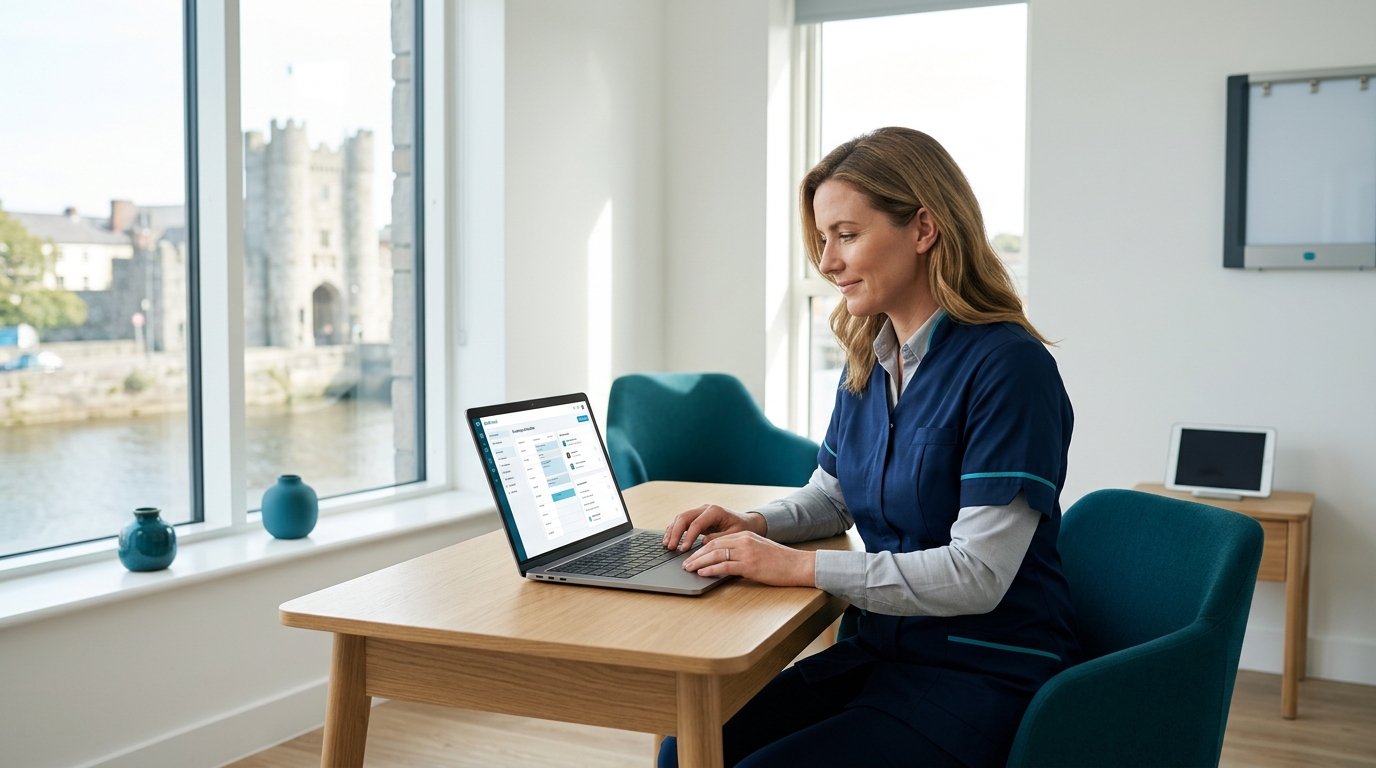
Integrating intelligent scheduling with your existing infrastructure requires a system that synchronises diaries across multiple private hospitals while maintaining strict data compliance. Effective integration ensures that when a patient books online, the data flows directly into the core clinical system, updating theatre lists and multi-insurer pre-authorisation workflows simultaneously.
A standalone booking link is of limited use if it does not communicate natively with your core Drogheda practice management software. If a medical secretary has to manually copy booking details from a web portal into the clinic’s main billing and charting software, the automation has failed. True integration requires bidirectional data flow. When a slot is booked online, it must instantly disappear from the consultant's master diary. If the consultant reschedules a clinic session, the system must automatically notify the affected patients and offer them alternative digital booking options.
To illustrate the difference between basic digital tools and integrated clinical platforms, consider the following comparison of scheduling capabilities:
| Feature | Generic Booking Tool | Integrated Clinical AI Booking |
|---|---|---|
| Triage Control | None. First-come, first-served. | Human-in-the-loop. Consultant approves triage before a booking link is generated. |
| Multi-Site Management | Requires separate calendars for each location. | Centralised diary. Recognises specific procedure rules per hospital (e.g., TRUS only at Mater Private). |
| Insurance Capture | Basic text fields only. No validation. | Captures VHI, Laya, Irish Life details and maps them directly to the billing module. |
| Clinical Intake | Basic questionnaires. | Specialty-specific forms (e.g., IPSS, ED inventories) shared securely by the patient. |
For a deeper analysis of how these systems compare across the broader Irish market, consultants should review the Best Practice Management Software Ireland 2026: Complete Comparison. The critical takeaway is that the booking engine must understand the commercial realities of Irish private practice.
For example, if a patient books a consultation for kidney stones, the integrated software should prompt the administrative team to check if the patient's specific Laya Healthcare plan covers day-case lithotripsy at the Hermitage Clinic. By capturing this data at the very beginning of the patient journey, the practice avoids the scenario where a patient arrives for a procedure only to discover a shortfall in their cover. This level of integration protects the consultant's revenue while providing transparency to the patient, ensuring that the clinical focus remains entirely on medical outcomes rather than financial administration.
Transitioning Your Drogheda Private Practice to AI Scheduling in 2026
Transitioning a private practice to intelligent scheduling involves auditing current referral pathways, defining strict clinical triage rules, and training secretarial staff on human-in-the-loop oversight. A phased implementation, starting with straightforward follow-up appointments before expanding to complex new referrals, ensures clinical safety and minimal disruption to existing consultant workflows.
Implementing an AI online booking Drogheda clinic solution is an operational shift, not just a software installation. Consultants who attempt to switch their entire diary over to automated scheduling overnight often encounter resistance from staff and confusion from referring GPs. A structured, methodical approach is required
It allows patients to book appointments securely at any time, reducing phone interruptions and freeing up clinic staff to focus on complex clinical support. Yes, reputable systems comply with GDPR regulations and host data within secure EU-based servers to protect patient confidentiality. Yes, patient-first applications like MeetBrigid allow patients to book appointments, pay bills, and view their results or letters while maintaining full control over what they share with each clinic. Most modern automated scheduling tools are designed to sync with leading Irish practice management systems to prevent double-bookings and maintain accurate clinical calendars. They send automated, timely SMS and email reminders, allowing patients to easily confirm, reschedule, or complete intake forms ahead of their consultation.Frequently asked questions about AI online booking Drogheda clinic
How does AI online booking benefit a private urologist in Drogheda?
Is patient data secure when using AI booking systems in Ireland?
Can patients manage their own appointments and records?
Will an AI booking system integrate with my existing practice management software?
How do automated booking systems reduce clinic no-shows?
Frequently Asked Questions
Ready to give Brigid the admin?
Request early access — founding practices are onboarding now. Or book a 30-minute walkthrough with our team to see Brigid run a workflow with your own data.
EU-hosted · GDPR · Founding-partner access · Cancel any time