AI Clinical Notes Gastroenterologist Ireland: Streamline 2026 Documentation
AI clinical notes for gastroenterologists in Ireland can reduce daily charting time significantly. Discover how to automate complex SOAP notes in 2026.
Researched and written by MedPro's AI pipeline and published automatically — not individually reviewed by a person. Useful as a starting point; check clinical, legal and regulatory details against a primary source before relying on them.
Built in Dublin · GDPR · Early access
MedPro saves Irish clinicians 9–18 hrs every week.
Why Private Gastroenterologists in Ireland Are Turning to AI Clinical Notes in 2026
Private gastroenterologists in Ireland are adopting AI clinical notes to manage the high administrative burden of multi-site endoscopy lists, complex IBD follow-ups, and multi-insurer billing. By automating dictation and discharge summaries, consultants reclaim hours previously lost to medical secretarial backlogs across hospitals like the Beacon and Mater Private.
The operational reality for a consultant gastroenterologist in Ireland rarely involves sitting in a single room with a unified computer system. A typical week is highly fragmented. A consultant might run a morning endoscopy list at the Hermitage Clinic, drive across the city for an afternoon outpatient clinic at the Blackrock Clinic, and manage inpatient consults at a third location. Each site operates its own distinct patient administration system, yet the consultant is ultimately responsible for maintaining a coherent, legally sound clinical record and ensuring the referring General Practitioner receives timely updates.
Historically, this fragmentation has been managed through sheer administrative brute force. Following a list of ten scopes—comprising a mix of diagnostic OGDs, screening colonoscopies, and perhaps complex polypectomies—the consultant faces a backlog of procedural reports and discharge letters. The traditional workflow relies on handheld dictaphones. The consultant dictates the findings, the audio files are securely transferred to a medical secretary, and the typing pool processes them over the following days. The letters are then returned for clinical review, signed, and finally dispatched via HealthLink to the referring GP.
This asynchronous loop introduces clinical risk and delays billing. If a patient with an acute ulcerative colitis flare requires immediate changes to their biologic therapy, the GP needs that information immediately, not in four working days. Furthermore, private health insurers such as VHI, Laya, and Irish Life require precise procedural coding and clinical justification before reimbursing for complex interventions. Delays in documentation directly translate to delays in practice revenue.
The shift towards an AI clinical notes gastroenterologist Ireland workflow is fundamentally about collapsing this dictation loop. By processing the clinical encounter or the post-procedure summary in real-time, artificial intelligence drafts the necessary documentation instantly. This allows the consultant to review, amend, and sign off on the letter before the patient has even left the recovery bay, fundamentally altering the pace of private practice administration.
 ▶ Watch on YouTube
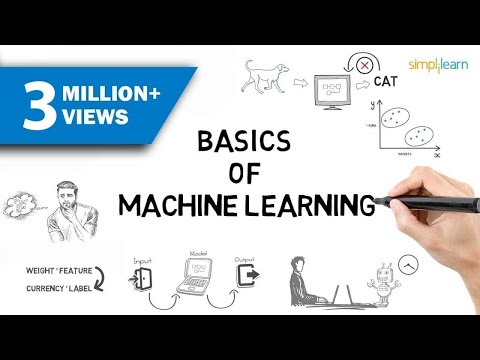
The Anatomy of a Gastroenterology SOAP Note: How AI Automates the Process
AI automates gastroenterology SOAP notes by transcribing the clinical consultation in real-time and structuring the dialogue into subjective symptoms, objective findings, assessment, and plan. A human-in-the-loop workflow ensures the consultant reviews and signs off on complex details like biologic dosing or colonoscopy scheduling before finalisation.
The SOAP (Subjective, Objective, Assessment, Plan) format remains the gold standard for clinical documentation, but its execution in a busy gastroenterology clinic is often compromised by time constraints. During a complex inflammatory bowel disease (IBD) follow-up, the consultant must capture a vast array of data points: the patient's reported stool frequency and consistency (often referencing the Bristol Stool Scale), the presence of nocturnal symptoms, extra-intestinal manifestations like joint pain, and adherence to current immunomodulators.
When relying on memory and post-clinic dictation, specific nuances of the patient's subjective experience can be lost. AI scribing systems address this by passively listening to the consultation (with explicit patient consent) and categorising the natural conversation into the structured SOAP format. The system filters out small talk and isolates the clinical data.
To illustrate the practical difference in the objective and assessment phases, consider the documentation of a patient presenting with persistent dyspepsia and a recent endoscopy:
| Documentation Phase | Traditional Dictation Workflow | AI-Automated SOAP Workflow |
|---|---|---|
| Subjective | Consultant summarises from memory: "Patient reports ongoing epigastric pain, worse after meals, occasional nocturnal waking." | AI extracts exact patient phrasing: "Reports burning epigastric pain 30 mins post-prandial. Waking 2x per week. Denies dysphagia or weight loss." |
| Objective | Consultant dictates lab results manually while reading from a separate screen. | System structures verbalised findings: "Recent OGD (Bons Secours, 12/10): Grade A Los Angeles oesophagitis. CLO test negative." |
| Assessment | Dictated as a brief summary statement, often merging with the plan. | Distinct clinical conclusion drafted: "GORD, refractory to standard dose PPI. H. pylori negative." |
| Plan | "Double dose PPI, review in 6 weeks." (Requires secretary to type, print, and post the prescription). | "1. Escalate to Esomeprazole 40mg BD. 2. GP to monitor. 3. Clinical review in 6 weeks." (Ready for immediate sign-off). |
Crucially, this technology operates strictly under a human-in-the-loop paradigm. The AI does not make clinical decisions, nor does it autonomously issue prescriptions or referrals. It functions purely as an advanced administrative assistant, drafting the comprehensive note for the consultant's expert review. The consultant remains entirely responsible for the accuracy of the final medical record, ensuring adherence to the Medical Council's Guide to Professional Conduct and Ethics regarding accurate and contemporaneous record-keeping.

Key Features to Look For in Gastroenterology Documentation Automation Software
Gastroenterology documentation automation software must feature specialty-specific vocabulary recognition, multi-site scheduling integration, and secure multi-insurer billing capabilities. Effective systems will accurately capture terms like oesophagogastroduodenoscopy and faecal calprotectin while supporting the complex pre-authorisation requirements of VHI, Laya, and Irish Life.
General-purpose dictation tools and consumer-grade AI models frequently fail in specialist medical environments. A system trained primarily on conversational English will struggle to accurately transcribe the specific lexicon of a gastroenterology clinic. When a consultant dictates findings regarding a "sessile serrated lesion in the ascending colon removed via piecemeal EMR," a generic transcription tool often produces garbled text that requires more time to correct than it would have taken to type manually.
Therefore, when evaluating software, the primary requirement is a highly tuned medical vocabulary. The system must effortlessly distinguish between similar-sounding pharmacological terms (e.g., mesalazine vs. mesalamine) and accurately capture complex procedural terminology such as endoscopic retrograde cholangiopancreatography (ERCP) or endoscopic ultrasound (EUS) findings.
Beyond clinical vocabulary, the software must address the commercial realities of running a private practice in Ireland. Multi-insurer billing is a significant source of administrative friction. Each insurer—VHI, Laya Healthcare, Irish Life Health, and Aviva—maintains distinct schedules of procedures and varying pre-authorisation protocols. For example, scheduling a patient for a repeat colonoscopy within a three-year window often triggers a requirement for detailed clinical justification from the insurer.
Effective practice management systems integrate the clinical note directly with the billing module. If the consultant's AI-drafted note specifies the removal of multiple polyps larger than 1cm, the software should flag the appropriate procedural codes for the billing team, reducing the risk of rejected claims. For further insights into how specialized software handles these administrative burdens, consult our guide on cutting Aviva admin for private gastroenterologists.
How to Integrate AI Scribes with Existing Irish Private EMR Systems
Integrating AI scribes with existing Irish private EMR systems requires secure API connections that comply with local health data standards. Consultants should select platforms that export structured clinical letters directly into existing hospital or private practice databases, minimising manual data entry and reducing administrative friction.
One of the most persistent challenges for private consultants in Ireland is the lack of interoperability between hospital systems. A gastroenterologist may have admitting privileges at the Mater Private, UPMC Whitfield, and the Beacon Hospital. Each of these institutions operates its own enterprise-level Electronic Medical Record (EMR) system. However, the consultant's private consulting rooms typically rely on a completely separate, smaller-scale practice management system.
Attempting to force an AI scribe to write directly into a locked-down hospital EMR is often technically impossible due to strict hospital IT security policies. Instead, the most effective integration strategy focuses on the consultant's private practice software. The AI tool operates on the consultant's secure device (smartphone or tablet) during the clinic or immediately post-procedure. Once the consultant reviews and approves the drafted note, the system uses a secure API to push the structured data—the GP letter, the internal clinic note, and the billing codes—directly into the private practice's main database.
From there, the practice management software handles the onward routing. The clinical letter is formatted onto the consultant's headed paper and dispatched electronically via HealthLink to the patient's GP. This ensures the primary care physician receives the update instantly, closing the communication loop without requiring the hospital's central EMR to interface directly with the AI tool. To understand how different platforms handle these integrations, review our complete comparison of practice management software in Ireland.

Addressing GDPR Compliance and Data Security in Irish Private Practices
GDPR compliance in Irish private practices mandates that AI clinical note systems host patient data securely within the European Union, typically on servers like AWS Dublin. Adherence to Data Protection Commission guidelines requires explicit patient consent for audio processing and strict data retention policies for clinical transcripts.
Data security is non-negotiable in healthcare. Gastroenterology clinics handle highly sensitive special category data under the General Data Protection Regulation (GDPR). Information regarding a patient's genetic predispositions (e.g., Lynch syndrome), chronic conditions, or infectious diseases must be protected with the highest cryptographic standards.
The Data Protection Commission (DPC) outlines strict principles for processing health data. When implementing AI transcription, consultants must ensure that the software provider acts as a legally bound Data Processor. Crucially, the audio recordings of the consultation must be handled transiently. Best practice dictates that the audio is captured, processed into text by the AI model, and the original audio file is immediately permanently deleted. The AI models must never use Irish patient data to train or improve their foundational algorithms.
Hosting location is another critical compliance factor. Systems routing patient audio to servers outside the European Economic Area (EEA) present significant legal risks. Irish consultants should exclusively utilise platforms that guarantee data residency within the EU, with infrastructure hosted in secure, ISO-certified data centres such as AWS Dublin.
Finally, transparency is a core tenet of GDPR. Patients must be explicitly informed that an AI tool is being used to assist with documentation, and they must have the right to decline its use without it affecting the quality of their care. This requires updating practice privacy policies and intake forms to reflect the new data processing workflow.
Step-by-Step: Implementing AI Clinical Notes in Your Gastroenterology Clinic
Implementing AI clinical notes in your gastroenterology clinic involves a phased approach: initial software auditing, patient consent integration, parallel testing alongside traditional dictation, and final workflow transition. This structured rollout ensures clinical safety, minimises disruption to endoscopy lists, and allows administrative staff to adapt to new processes.
Transitioning from a traditional dictation-and-typing model to an automated AI workflow requires careful change management. A sudden, uncoordinated switch can disrupt clinic flow and cause anxiety among administrative staff. The most successful implementations follow a deliberate, phased methodology.
- Conduct a Workflow Audit: Before introducing new software, map out the current documentation bottlenecks. Identify how many hours per week are spent on dictation, the average turnaround time for a GP letter, and the volume of queries from insurers regarding incomplete clinical codes. This establishes a baseline to measure the new system's impact.
- Update Patient Consent Protocols: Ensure your practice manager updates the clinic's privacy notices and patient intake forms. The front desk staff should be trained to briefly explain the use of the AI tool to patients upon arrival, ensuring explicit, documented consent is obtained before the consultant begins the consultation.
- The Shadow Phase (Parallel Testing): For the first week of implementation, run the AI clinical notes gastroenterologist Ireland system alongside your existing workflow. Dictate your notes as usual, but allow the AI to simultaneously draft the SOAP note and clinical letter. Compare the AI's output against your traditional dictation. This builds confidence in the system's medical vocabulary and allows you to refine your prompting style.
- Administrative Realignment: As the AI begins to handle the bulk of the transcription, the role of the medical secretary shifts. Rather than spending hours typing from audio files, their time is freed up. This capacity should be redirected towards higher-value tasks: managing complex multi-insurer billing queries, coordinating theatre lists across different private hospitals, and handling patient triage.
- Full Deployment and Review: Transition fully to the AI workflow for all outpatient clinics and post-endoscopy reporting. Schedule a review at the 30-day mark to assess the reduction in administrative hours and the improvement in letter turnaround times.
The Future of Private Specialty Care: AI and Patient-Facing Digital Tools
The future of private specialty care connects AI-driven clinical documentation with patient-facing digital tools that empower individuals to manage their own healthcare administration. When patients control their bookings, intake forms, and billing through a secure app, consultants experience a naturally derived reduction in practice coordination overhead.
While AI clinical scribes address the documentation burden on the consultant, a significant portion of practice friction originates from the patient-facing side of the clinic. The traditional model relies heavily on phone calls: patients calling to book appointments, calling to check if their referral has been received, or calling to pay an outstanding invoice. This creates a constant administrative hum that distracts medical secretaries from clinical coordination tasks.
The next phase of practice management focuses on putting the patient in control of their own administrative journey. Platforms like MedProAI approach this through complementary systems: the AI agent handles the heavy lifting of clinical drafting for the consultant, while a companion application empowers the patient.
Through the MeetBrigid patient app, individuals take ownership of their clinic interactions. Rather than waiting on hold, patients book their appointments directly through the app. They complete necessary intake forms—such as detailing their family history of colorectal cancer or current medication lists—before they ever step into the waiting room. Following the consultation, they can pay their bill directly from their phone.
Crucially, the app allows patients to see their results, discharge summaries, and official letters (though not the consultant's private clinical SOAP notes). Furthermore, because Irish private healthcare is fragmented, a patient might see a gastroenterologist in one clinic and a rheumatologist in another. The patient app allows the individual to deliberately share specific health documents with different clinics, granting access category by category. This is entirely patient-driven; there is no automatic syncing or merging of records across distinct private practices, ensuring the patient retains absolute control over their data.
When patients handle their own intake, bookings, and payments, the practice experiences a profound, derived benefit. The phone rings less. The medical secretary is no longer a debt collector or a data entry clerk. The entire clinic operates with a quieter, more focused efficiency, allowing the consultant to concentrate entirely on complex gastroenterological care.
Next Steps: If your gastroenterology clinic is struggling with dictation backlogs across multiple private hospital sites, begin by auditing your current letter turnaround times. Identify exactly how many days elapse between a colonoscopy and the GP receiving the discharge summary. Once you have that baseline, you can accurately assess the value of automating your documentation.
MedProAI offers a 7-day free trial for Irish practices—visit auth.medproai.com to try it.
Frequently asked questions about AI clinical notes gastroenterologist Ireland
Can AI clinical notes handle complex gastroenterology terminology?
Yes, modern AI scribing tools are trained on specialized medical vocabularies, enabling them to accurately capture discussions regarding endoscopy, colonoscopy, inflammatory bowel disease, and other gastroenterology-specific conditions.
Is using AI for clinical notes compliant with Irish GDPR regulations?
Yes, provided you select an AI software vendor that hosts data within the EU, signs a robust Data Processing Agreement, and adheres to strict GDPR standards.
Do I need to edit the SOAP notes generated by the AI?
Yes, the consultant must always review, edit, and approve every AI-generated clinical note to ensure absolute clinical accuracy before finalizing the record.
How does MeetBrigid fit into a private gastroenterologist's digital ecosystem?
MeetBrigid is a patient-first app allowing patients to manage their bookings and bills, and securely share specific documents, rather than acting as a practice-side clinical scribe.
Does AI documentation integration require replacing my current EMR?
Generally no, many modern AI clinical note solutions run alongside or integrate directly with existing private practice management software used by Irish consultants.
Frequently Asked Questions
Ready to give Brigid the admin?
Request early access — founding practices are onboarding now. Or book a 30-minute walkthrough with our team to see Brigid run a workflow with your own data.
EU-hosted · GDPR · Founding-partner access · Cancel any time