Private Radiologist Galway: Cut Laya Billing Admin in 2026
Private radiologist in Galway? Streamline your practice by reducing manual Laya billing admin with modern, automated workflows built for Irish consultants.
Researched and written by MedPro's AI pipeline and published automatically — not individually reviewed by a person. Useful as a starting point; check clinical, legal and regulatory details against a primary source before relying on them.
Built in Dublin · GDPR · Early access
MedPro saves Irish clinicians 9–18 hrs every week.
The Growing Burden of Laya Billing for Galway Radiologists
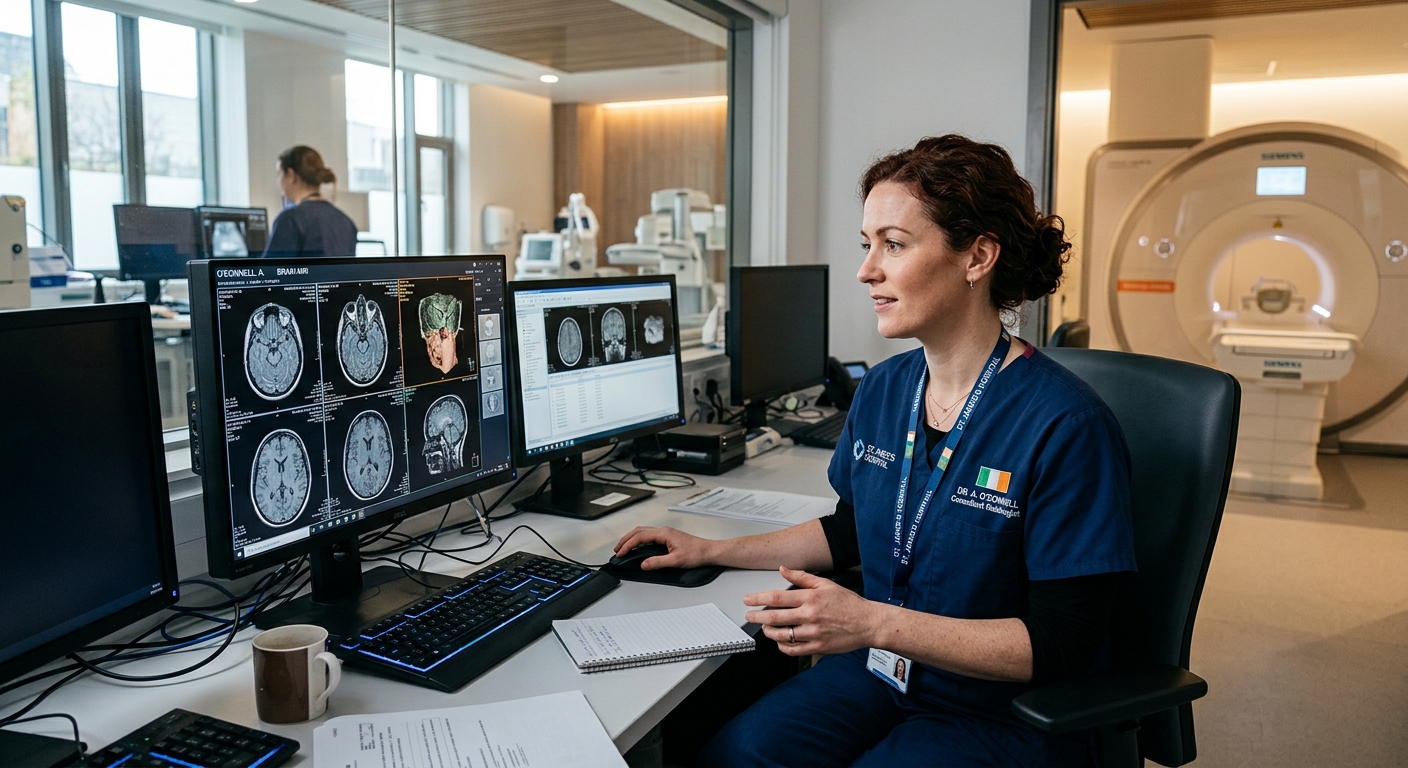
The administrative load of Laya billing for Galway radiologists stems from complex pre-authorisation requirements for high-modality scans, frequent code updates, and manual reconciliation processes. This friction delays revenue realization and consumes significant secretarial hours that should be dedicated to clinical coordination and patient care. In private diagnostic imaging, the volume of outpatient procedures creates a unique administrative challenge. Unlike surgical specialties where a consultant might bill for a handful of complex procedures per theatre list, a radiologist may report on dozens of scans in a single session. Each of these scans—whether an MRI pelvis, a CT thorax, or an ultrasound-guided biopsy—requires specific diagnostic coding that must perfectly align with Laya Healthcare’s reimbursement schedules. The complexity is compounded by the pre-authorisation requirements for high-tech scans. Laya, like other Irish private health insurers, requires stringent pre-approval for MRI and CT imaging to ensure clinical necessity. When the pre-authorisation process is disconnected from the booking and billing workflow, the risk of performing a scan without the correct administrative clearance increases. This often results in rejected claims, requiring secretarial staff to retrospectively chase approvals or appeal decisions, a process that can delay payment by weeks or even months. According to a 2023 report by the Health Information and Quality Authority (HIQA) on national health information systems, the lack of interoperability between clinical and administrative platforms remains a primary driver of inefficiency in Irish healthcare. For a consultant radiologist, this lack of interoperability manifests as duplicated effort. The clinical data exists within the RIS and PACS, but the financial data must be manually keyed into a separate billing system or directly into the Laya portal. Furthermore, the management of policy excesses and shortfalls adds another layer of complexity. Many Laya policies include a patient shortfall for outpatient radiology. Collecting this €50 or €100 excess manually at the front desk, or chasing it via invoice after the fact, is a disproportionate drain on administrative resources. As diagnostic volumes increase, the traditional manual approach to managing these micro-transactions and high-volume claims becomes entirely unsustainable for a busy private practice. ▶ Watch on YouTube
Why Legacy Radiology Systems Struggle with Modern Irish Claims
Legacy radiology systems fail with modern Irish claims because they lack direct API integration with insurers like Laya, rely on manual data entry, and cannot automatically cross-reference diagnostic codes with pre-approval criteria. This results in high rejection rates, protracted payment cycles, and significant administrative overhead. Many private radiology practices still rely on practice management software designed over a decade ago. These systems function adequately as digital appointment books and basic demographic databases, but they were not architected for the complexities of modern, multi-insurer electronic billing. When a legacy system cannot communicate directly with the Laya claims portal, the practice is forced to rely on a 'swivel-chair' integration—where a secretary looks at the procedure code in the RIS on one screen and manually types it into the billing software or insurer portal on another. This manual bridge is the root cause of most billing errors. A simple transcription mistake—entering the code for an MRI brain without contrast instead of with contrast—can lead to an immediate claim rejection. Once a claim is rejected, it enters a manual exception queue, requiring human intervention to investigate the error, correct the code, and resubmit the claim. In a high-volume radiology clinic, even a 5% rejection rate translates to hours of avoidable administrative work every week. Moreover, legacy systems struggle with the dynamic nature of Irish health insurance. Insurers frequently update their schedule of benefits, altering procedure codes, reimbursement rates, and pre-authorisation rules. Older software typically requires manual updates or cumbersome patches to reflect these changes. If a practice is slow to update their internal coding tables, they risk submitting claims based on outdated rules, further increasing the rejection rate. Security and compliance are also significant concerns when using outdated software to process claims. The Data Protection Commission (DPC) mandates strict controls over the processing of special category health data. Legacy systems that require staff to export patient lists to spreadsheets for manual reconciliation, or that transmit unencrypted billing data, pose a severe GDPR risk. Modern billing requires secure, encrypted, and auditable data flows that legacy platforms simply cannot support. For a broader look at modern system requirements, you can review this Best Practice Management Software Ireland 2026: Complete Comparison.
Key Features of Next-Generation Radiology Practice Management Software
Next-generation radiology practice management software requires native integration with Irish private insurers, automated pre-authorisation tracking, secure DICOM/PACS reporting links, and intelligent coding validation. These features collectively reduce claim rejection rates and minimise manual administrative intervention throughout the entire billing cycle. To move away from the inefficiencies of legacy platforms, a radiology practice must evaluate software based on its ability to handle the specific demands of high-volume diagnostic billing. The focus must shift from simple data storage to active workflow automation. The most critical feature is intelligent coding validation. Before a claim is ever submitted to Laya, the software should automatically cross-reference the planned procedure code against the patient’s specific policy type and current insurer rules. If a mismatch is detected—for instance, if a specific MRI code requires a pre-authorisation number that is missing from the file—the system should flag the error immediately, preventing a doomed claim from being submitted. Here is a comparison of how legacy systems and next-generation platforms handle the core components of radiology billing:| Billing Component | Legacy System Approach | Next-Generation Automation |
|---|---|---|
| Pre-Authorisation | Manual checking of Laya portal; secretary notes approval number in a text field. | Digital tracking; system automatically flags missing pre-auth before the scan is booked. |
| Procedure Coding | Manual transcription from RIS to billing software; high risk of keystroke errors. | Automated mapping; procedure codes in the RIS trigger corresponding billing codes. |
| Claim Submission | Batched manual uploads at the end of the week or month. | Continuous automated submission triggered by the finalisation of the clinical report. |
| Shortfall Collection | Invoices posted to patients; manual follow-up calls for credit card payments. | Digital payment links sent automatically; excesses collected prior to the appointment. |
| Remittance Reconciliation | Manual cross-referencing of bank statements against submitted claims spreadsheets. | Automated reconciliation; payments are matched to claims, highlighting only unpaid exceptions. |
Step-by-Step: Automating Your Laya Claims Workflow in 2026
Automating your Laya claims workflow involves standardising your procedural codes, implementing digital pre-authorisation checks at the point of booking, configuring automated claim submission post-reporting, and establishing an exception-based reconciliation process. This structured approach eliminates routine manual billing tasks and accelerates revenue collection. Transitioning from a manual billing process to an automated workflow requires a deliberate, phased approach. It is not merely about installing new software; it is about re-engineering the administrative processes that surround the clinical work. Step 1: Standardise and Map Procedural Codes The foundation of Laya billing automation is accurate data mapping. You must ensure that the clinical procedure codes used in your RIS directly map to the correct Laya billing codes. This requires an initial audit of your most common procedures (e.g., ultrasound abdomen, MRI spine, CT guided injections). Once mapped, the system should automatically translate the clinical activity into the correct financial claim, removing the need for a secretary to interpret and re-key the data. Step 2: Implement Digital Pre-Authorisation at Booking The most effective way to prevent claim rejections is to catch errors before the patient arrives. When a referral is received and an appointment is booked, the software should prompt the administrative team to secure and log the Laya pre-authorisation number. If a scan requires approval, the system should place a hard stop on billing until that approval is recorded. This shifts the administrative work from reactive troubleshooting to proactive validation. Step 3: Trigger Automated Submission Post-Reporting In an optimised workflow, the finalisation of the clinical report should be the catalyst for billing. Once the consultant signs off on the diagnostic report in the PACS/RIS, the integration should signal the practice management software that the procedure is complete. The software then automatically compiles the mapped codes, the pre-authorisation number, and the patient demographics, generating and submitting the claim to Laya without human intervention. Step 4: Establish Exception-Based Reconciliation When claims are submitted automatically and accurately, the vast majority will be paid without issue. Therefore, your administrative team should no longer spend time confirming successful payments line-by-line. Instead, they should operate on an exception basis. The software should automatically reconcile incoming remittance files from Laya against submitted claims, only alerting staff to the 2-5% of claims that are delayed, underpaid, or rejected. This allows secretaries to focus their time solely on the complex cases that require human problem-solving. For similar workflows in other specialties, see this Private Colorectal Surgeon Galway: VHI Claims Automation Playbook.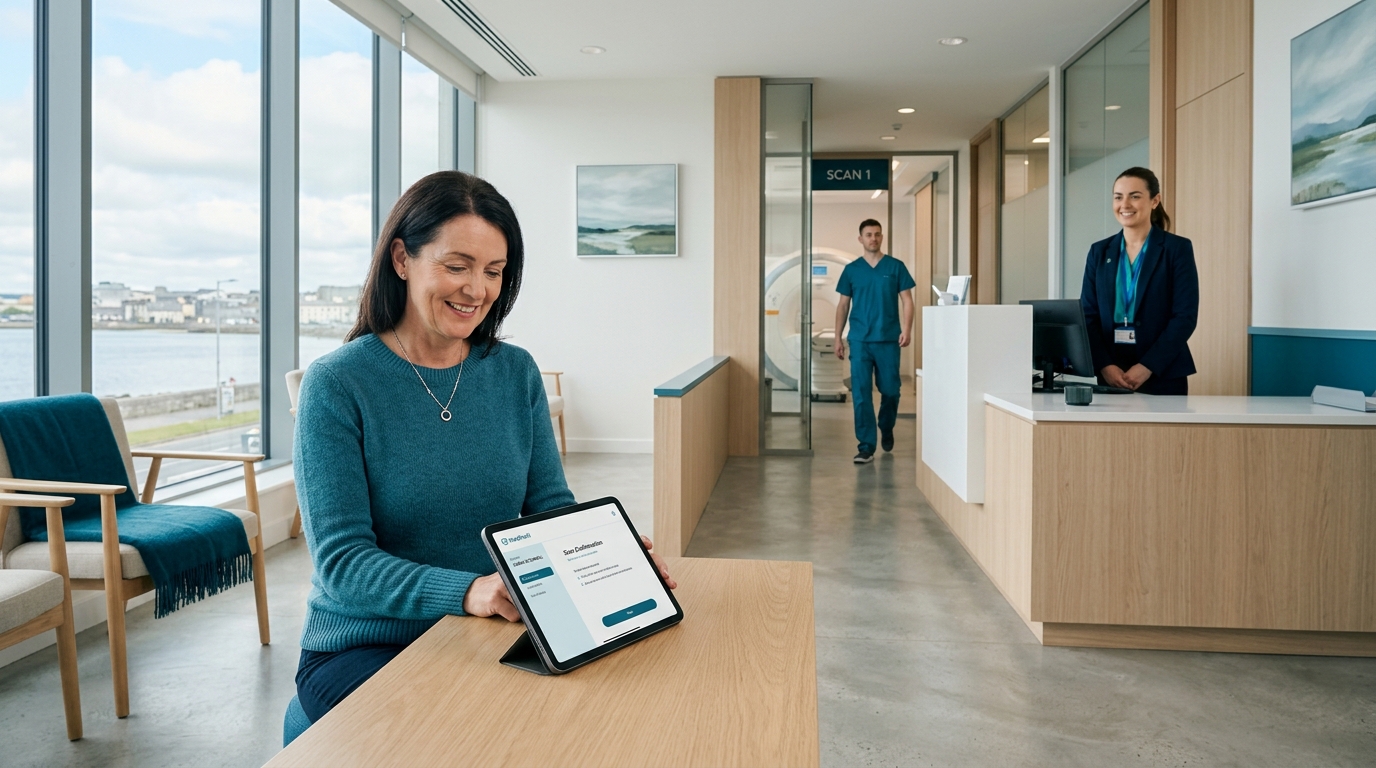
How Patient-Led Admin Reduces the Burden on Your Radiology Clinic
Patient-led administration reduces clinic burden by allowing patients to securely upload their own referral letters, complete intake forms, and settle shortfall payments via a dedicated app before their scan. This shifts data entry away from secretarial staff and accelerates the pre-authorisation timeline while keeping the patient in control. Historically, the administrative burden of a private radiology appointment has fallen entirely on the clinic. The secretary receives a faxed or emailed referral, manually types the patient’s demographic details into the system, calls the patient to arrange a time, and attempts to collect any Laya policy excess over the phone. This is a highly inefficient use of skilled administrative time. The modern approach flips this dynamic, empowering the patient to manage their own administrative prerequisites. This is the core function of MeetBrigid, a companion patient app designed to put the patient in control of their healthcare interactions. When a patient is referred to your clinic for an MRI or ultrasound, they use the app to securely upload their GP referral letter and grant your specific clinic access to it. They maintain ownership of their documents, choosing exactly what to share and with whom. Furthermore, the patient can use the app to pay their Laya policy excess directly from their phone before they even arrive at the clinic. They can also complete any necessary clinical intake forms or safety questionnaires (such as an MRI safety checklist) digitally. The primary purpose of this technology is to give patients agency and transparency over their bookings and bills. However, the derived, secondary consequence for your practice is profound. Your secretary no longer spends twenty minutes on the phone chasing a referral document, reading out available appointment times, or taking a credit card number. The patient arrives for their scan with their demographics verified, their referral attached to their file, their safety questionnaire completed, and their bill settled. This allows the clinic staff to focus on patient flow and clinical coordination rather than basic data entry.Choosing the Right Galway Specialist Software for Your Private Practice
Selecting the right specialist software for your Galway practice requires evaluating the platform’s compliance with Irish data protection standards, its proven capability to handle complex multi-insurer billing, and its adaptability to multi-site consultant workflows across different private hospital environments. For a private radiologist Galway presents a specific working environment. You are likely moving between major private hospitals and perhaps maintaining a separate consulting room for interventional reviews. The software you choose must accommodate this geographic flexibility. It cannot be tethered to a single hospital's internal network; it must be a secure, cloud-based solution that provides a unified view of your practice regardless of where you are reporting from on any given day. Compliance is non-negotiable. Any software handling diagnostic codes and patient financials must adhere strictly to GDPR and be hosted within the EU. The Faculty of Radiologists (RCSI) consistently emphasises the importance of secure data handling in private practice. Ensure that any vendor you consider uses enterprise-grade encryption and maintains transparent audit logs for all billing activity. Finally, consider the role of artificial intelligence in reducing administrative overhead. Platforms like MedProAI incorporate AI to assist with practice management. The Brigid AI agent can draft necessary administrative correspondence, flag potential coding discrepancies before submission, and organise incoming referrals. Crucially, this is always a human-in-the-loop system: Brigid drafts and automates the administrative work, but a clinician or senior administrator always reviews and signs off before any action is finalised or a claim is submitted. This ensures you retain total control over your practice operations while significantly reducing the time spent on manual tasks. By moving away from legacy systems and adopting software designed for the realities of modern Irish healthcare billing, consultant radiologists can eliminate the backlog of Laya claims, reduce their secretarial overhead, and ensure that their time is spent on clinical diagnostics rather than administrative troubleshooting. **Take the next step:** Review your current Laya rejection rate for the past quarter. If it exceeds 3%, your manual coding and pre-authorisation processes are costing you significant revenue and administrative time, indicating a clear need for automated billing software. MedProAI offers a 7-day free trial for Irish practices -- visit auth.medproai.com to try it.Frequently asked questions about private radiologist Galway
How does Laya billing automation save time for private radiologists in Galway?
Automation reduces manual data entry and validates claim details against Laya's rules before submission, preventing common errors and rejections.
Can radiology practice management software in Ireland handle complex imaging codes?
Yes, modern specialist platforms are designed to map complex radiology codes directly to insurer schedules, streamlining the billing process.
What role does the patient play in reducing clinical billing administration?
By using patient-first apps like MeetBrigid, patients manage their own bookings, settle outstanding bills, and share intake documents, which secondary reduces clinic admin.
Is patient-shared data secure when automating radiology billing?
Yes, reputable Irish specialist systems utilize GDPR-compliant, EU-hosted infrastructure to ensure all patient-shared information and digital documents remain secure.
Frequently Asked Questions
Ready to give Brigid the admin?
Request early access — founding practices are onboarding now. Or book a 30-minute walkthrough with our team to see Brigid run a workflow with your own data.
EU-hosted · GDPR · Founding-partner access · Cancel any time