Private Radiologist Cork: Automate Reporting & VHI Claims
Discover how a private radiologist in Cork can automate VHI claims and dictation workflows to reduce administrative delays in private practice.

Built in Dublin · GDPR · 7-day trial
MedPro saves Irish clinicians 9–18 hrs every week.
The Administrative Bottleneck in Cork's Private Radiology Practices
The primary administrative bottleneck for private radiologists in Cork stems from fragmented, manual workflows for billing, reporting, and referrer communication. Juggling distinct procedure codes for VHI, Laya, and Irish Life, managing dictation-transcription cycles, and coordinating across multiple sites like the Bons Secours and Mater Private Cork consumes hours of non-clinical time, directly eroding practice efficiency and profitability.
A radiologist’s day should be centred on diagnostic interpretation. Yet, for many operating in Cork’s vibrant private healthcare scene, a significant portion of the week is lost to administrative drag. The clinical workflow itself is highly digitised—from the modality to the PACS viewer. The moment a report is finalised, however, the process often reverts to a series of manual, time-intensive tasks that do not scale.
Consider the billing cycle. A single list of MRIs can involve patients covered by VHI, Laya Healthcare, Irish Life Health, and Aviva, each with its own unique schedule of benefits, procedure codes, and submission requirements. For a solo practitioner or small group, this requires a medical secretary to spend hours cross-referencing patient policies with specific scan types (e.g., MRI Brain with contrast vs. without), manually creating invoices, and chasing down payments. The rejection of a single claim due to a coding error can trigger a cascade of follow-up calls and paperwork, delaying revenue by weeks or even months.
Reporting presents a similar challenge. While voice recognition has improved, many practices still rely on a traditional dictation-transcription loop. The radiologist dictates a report, it enters a queue for a typist, and the draft is returned hours or days later for review and signature. Only then can it be dispatched—often by post or insecure email—to the referring consultant or GP. This inherent delay not only slows down the diagnostic pathway but also introduces multiple points where errors can occur or information can be lost.
 ▶ Watch on YouTube
How Radiology Billing Automation Speeds Up VHI Claims
Radiology billing automation accelerates VHI claims by creating a direct, rules-based link between the clinical procedure and the financial submission. By mapping specific scan types in the RIS to corresponding VHI procedure codes, the system auto-generates accurate invoices the moment a report is finalised, submits them electronically, and automates reconciliation, reducing the payment cycle from over 30 days to under a week.
The traditional process for managing VHI claims in a radiology practice is notoriously inefficient. It relies on human intervention at almost every stage, each one a potential point of failure or delay:
- Manual Code Look-up: The secretary must correctly identify the VHI code for the specific examination performed (e.g., distinguishing code 3557 for an MRI of one area from 3558 for two areas).
- Data Re-entry: Patient demographic and policy information is often manually keyed into a separate billing system or portal.
- Delayed Submission: Invoices are often batched and submitted weekly, adding an immediate delay to the revenue cycle.
- Chasing Rejections: A simple typo or incorrect code results in a rejection, initiating a time-consuming process of investigation and resubmission.
Billing automation transforms this workflow. A modern practice management platform integrates with the clinical system (RIS/PACS) to capture the procedure details automatically. The system then applies a pre-configured set of rules to assign the correct VHI code and fee. The claim is generated and submitted electronically without manual intervention. According to the Health Insurance Authority's 2022 market report, VHI accounted for 48% of the private health insurance market in Ireland, making the efficient processing of their claims a critical factor for practice viability. Automating this large volume of work provides a significant and immediate return.
This automation is particularly powerful for managing the complexities of radiology billing. For instance, rules can be configured to handle modifiers for contrast media, multiple body parts, or interventional procedures, which are common sources of billing errors. When VHI remits payment, the system can automatically reconcile the paid amounts against the submitted claims, instantly flagging any shortfalls or denials for the practice manager’s attention. This shifts the administrative focus from manual data entry to strategic oversight of exceptions, dramatically improving financial performance. For a busy consultant practice handling VHI claims, this can recover thousands in lost revenue annually.
Integrating RIS, PACS, and Modern Practice Management Systems
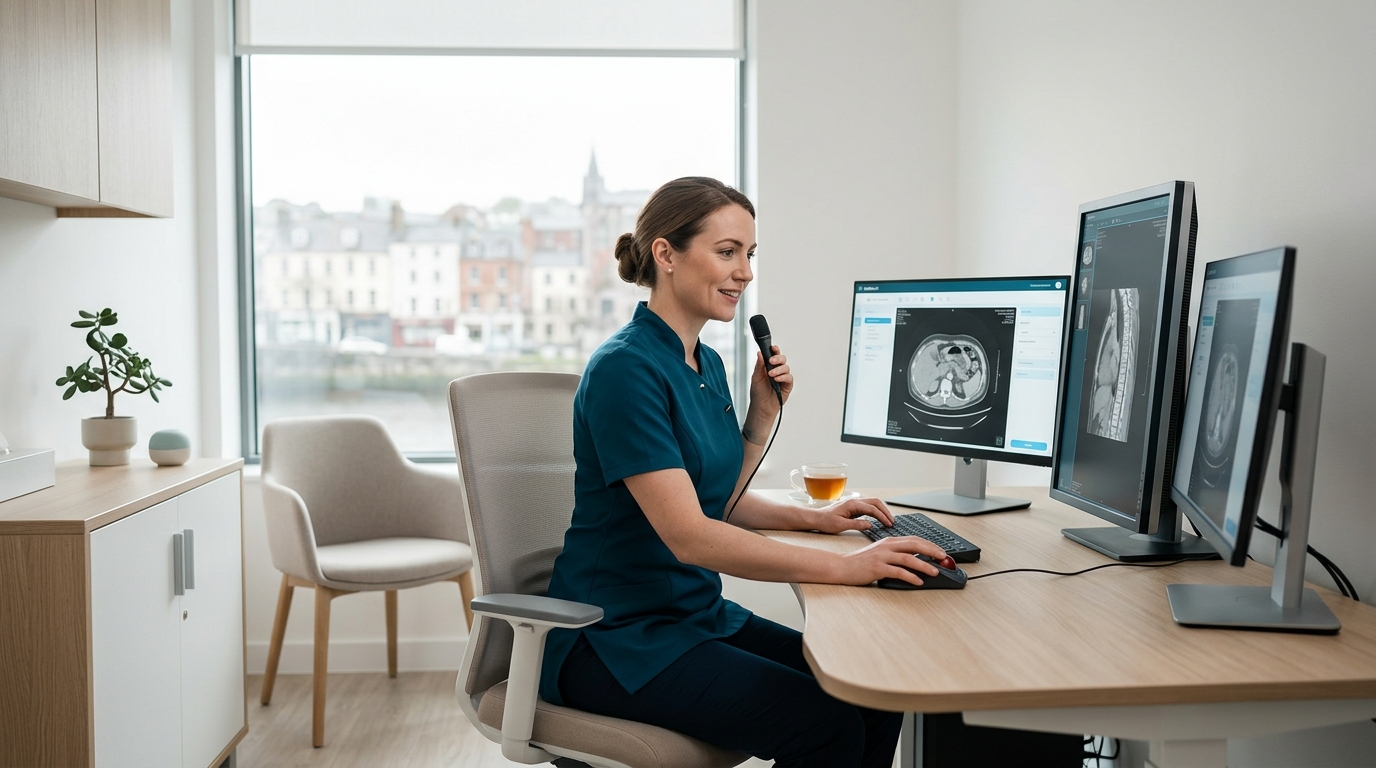
Integrating a Radiology Information System (RIS) and Picture Archiving and Communication System (PACS) with a modern Practice Management System (PMS) unifies the entire patient journey. This integration ensures that data flows automatically from scheduling and registration (PMS) to clinical workflow (RIS/PACS) and back to billing and results distribution (PMS), eliminating data silos and redundant administrative work.
In many established radiology practices, the RIS, PACS, and billing software operate as separate, disconnected islands of information. The PACS is the domain of the image, the RIS manages the departmental workflow, and the PMS or accounting software handles the money. This separation forces staff to act as human bridges, constantly re-entering patient names, procedure details, and insurance information between systems. This is not only inefficient but also a significant source of clinical and financial risk.
A truly integrated environment, typically achieved through modern APIs and established healthcare standards like HL7 and DICOM, creates a single, coherent workflow. Here is how data moves through a unified system:
- Referral & Booking: A referral arrives and is entered into the PMS. The patient's demographic and insurance details are captured once. The appointment is booked, and this data is automatically pushed to the RIS, creating the worklist entry.
- Patient Arrival & Scan: The patient checks in, and the RIS manages their journey through the department. The modality (CT, MRI) queries the RIS, receives the patient data, and performs the scan.
- Image & Reporting: Images are sent to the PACS. The radiologist opens the study in their PACS viewer, which is linked to the RIS. They dictate their report directly into the RIS, which may use integrated voice recognition.
- Report Finalisation & Billing Trigger: The radiologist electronically signs the report in the RIS. This action serves as the trigger event. The system automatically sends the finalised report and a billing instruction to the PMS.
- Automated Invoicing & Distribution: The PMS receives the instruction, generates the correctly coded invoice for the insurer (e.g., VHI) and/or the patient, and submits it electronically. Simultaneously, it securely delivers the report to the referring clinician and, if configured, the patient.
This level of integration was once the exclusive domain of large hospitals with extensive IT budgets. However, cloud-based platforms have made it accessible and affordable for private practices. The key is to select a PMS designed with this interoperability in mind. When evaluating options, a critical question is not just "Can it integrate?" but "How does it integrate?". The goal is an uninterrupted, bidirectional flow of information that makes the boundaries between systems invisible to the end-user. You can explore a full comparison of practice management software vendors to better understand the technical capabilities available.
Reducing Diagnostic Turnaround Times with Automated Workflows
Automated workflows drastically reduce diagnostic turnaround time (TAT) by compressing the post-interpretation stages of the reporting process. Technologies like AI-powered dictation, automated report formatting, and instant electronic distribution to referrers can cut the time from report finalisation to delivery from days to mere minutes, ensuring faster clinical decision-making.
The total diagnostic TAT is a critical metric in radiology, with direct implications for patient outcomes. A 2017 systematic review in the Journal of the American College of Radiology highlighted that delays in report communication are a major contributor to overall TAT. While the radiologist’s interpretation time is a key component, significant delays accumulate after the dictation is finished. Automation targets these post-interpretation delays with precision.
The first major gain comes from eliminating the traditional transcription pool. Instead of a dictated audio file sitting in a queue, modern systems use AI to transcribe the radiologist's speech in real-time. These systems learn the individual's accent, terminology, and preferred phrasing. This creates a draft report instantly, ready for the radiologist's immediate review and sign-off. Platforms like MedProAI use a dedicated AI agent, Brigid, to perform this function, acting as a tireless assistant that drafts reports, letters, and billing summaries based on the clinician's dictation, always with the human expert performing the final validation.
The second acceleration point is distribution. An automated workflow replaces the manual process of printing, enveloping, and posting reports, or the insecure and unreliable method of emailing PDFs. Once a radiologist signs off a report, the system can:
- Automatically format it into a professional letterhead.
- Identify the correct referring clinician from the patient record.
- Deliver the report electronically and securely, often via a direct Healthmail integration or a secure portal link.
- Log the delivery, providing an auditable trail that the report was sent and received.
Furthermore, these workflows can be embedded with clinical intelligence. For example, rules can be created to detect critical findings based on keywords in the report (e.g., 'occlusion', 'malignancy', 'haemorrhage'). When detected, the system can automatically flag the report for priority delivery or even send an SMS alert to the referring clinician, ensuring that urgent information bypasses routine communication channels.

Empowering Cork Patients: Secure Results Sharing via MedYou
Modern practice management platforms empower patients by giving them direct and secure access to their finalised radiology reports and images via a dedicated mobile app. This self-service model reduces the administrative burden of staff fielding calls for results, improves patient engagement, and provides patients with a portable health record they control, which is a key right under GDPR.
The traditional patient experience after a scan is one of waiting and uncertainty. They are often told their GP or consultant will be in touch with the results, leading to anxious follow-up calls to both the referrer's and the radiologist's rooms. This generates a significant, unnecessary workload for administrative staff, who spend their time acting as intermediaries.
A patient-centric approach flips this model. By using a secure patient app, the practice can provide results directly to the patient once they are finalised. MedProAI's companion patient app, MedYou, is an example of this model in action. After the radiologist signs off on a report, it can be made available within the patient’s secure MedYou account. This has several profound benefits:
- Reduced Admin Overhead: The number of inbound calls from patients chasing results drops significantly, freeing up secretarial time for higher-value tasks like managing appointments and complex billing queries.
- Improved Patient Experience: Patients feel more in control and informed about their own healthcare. They can review their report at their convenience and prepare questions for their follow-up consultation.
- Enhanced Data Portability: This is a crucial advantage for patients in the Irish private system, who often see specialists across different hospitals and cities. A patient who had a CT scan in Cork can use their app to instantly and securely grant their consultant at the Blackrock Clinic in Dublin access to that report and its images. This is patient-mediated data sharing, fully compliant with GDPR principles of data control and access, as outlined by Ireland's Data Protection Commission.
Concerns about patients viewing potentially distressing results before speaking to a clinician are valid and can be managed within the system. Release of reports to the patient app can be configured with a built-in delay—for instance, 24 or 48 hours after it has been sent to the referrer—giving the clinician time to make contact first for sensitive findings. This combines the efficiency of direct access with the necessity of clinical oversight.
Transitioning to an Automated Radiology Practice in 2026
Transitioning to an automated radiology practice requires a strategic, phased implementation that prioritises workflow analysis and data integrity. The process involves auditing current administrative tasks, selecting an integrated, compliant software partner, and executing a managed data migration and training programme. This ensures a smooth changeover with minimal disruption to clinical services and daily patient lists.
Making the leap from legacy systems and manual processes to a modern, automated platform can seem daunting. However, a structured approach demystifies the process and mitigates the risks. For a private radiologist in Cork, or any specialist group in Ireland, the transition can be broken down into four manageable phases.
The 4 Phases of Practice Automation
Phase 1: Audit and Goal Setting
Before looking at any software, map your existing workflows. Use a simple spreadsheet to track the time spent on key administrative tasks for one week: creating invoices, chasing VHI, Laya, or Irish Life payments, transcribing reports, and handling phone queries. This data will not only highlight your biggest pain points but also build the business case for investment by quantifying the cost of inefficiency.
Phase 2: Vendor Due Diligence
With your goals defined, evaluate potential software partners. Your checklist should go beyond features and focus on fundamentals:
- Compliance: Is the platform fully GDPR-compliant and hosted within the EU (e.g., on AWS in Dublin)?
- Integration: Does it have proven, API-based integration capabilities with your existing or planned RIS/PACS?
- Irish Focus: Does the vendor understand the specific complexities of the Irish private insurance market (VHI, Laya, etc.)?
- Support & Onboarding: Do they provide on-the-ground or dedicated remote support for Irish practices? What does the setup process entail?
Phase 3: Managed Implementation
A successful transition is not a DIY project. Your chosen partner should manage the technical heavy lifting. This includes migrating your existing patient demographic data into the new system. Crucially, this phase must involve comprehensive training for both the radiologist and the administrative staff, tailored to their specific roles in the new, automated workflows.
Phase 4: Pilot and Optimise
Don't try to change everything overnight. Start with a pilot project focused on your biggest bottleneck, such as automating VHI billing. Run the new system in parallel with the old for a short period to validate its accuracy. Once proven, you can decommission the old process and move on to automating the next workflow, like report distribution. This iterative approach builds confidence and ensures a stable transition.
This phased approach transforms a potentially disruptive overhaul into a controlled evolution. It positions the practice to not only reclaim valuable clinical time but also to build a more resilient, efficient, and profitable operation for the years ahead.
The first practical step you can take today is to begin the audit described in Phase 1. For a single clinic list, have your secretary keep a simple log of every administrative touchpoint related to those patients: time spent creating invoices, time on the phone to insurers, time spent posting letters. The numbers will provide a powerful, data-driven foundation for your next decision.
MedProAI is an AI-powered practice management platform designed for Irish consultants, automating billing, dictation, and patient communication. To see how it could fit your practice, explore the platform features or start a no-obligation, 7-day free trial.
Frequently asked questions about private radiologist Cork
How does billing automation prevent VHI claim rejections for Cork radiologists?
Automation software validates diagnostic and procedure codes against VHI's specific rules before submission, instantly flagging errors that would otherwise lead to manual rejections and payment delays.
Can I integrate my existing PACS with automated practice management software?
Yes, modern Irish practice management platforms support HL7 and DICOM standards, allowing seamless integration with your existing PACS to link images directly to patient files.
How does the MedYou patient app assist a private radiology clinic?
MedYou places the patient in control of their admin, enabling them to book appointments, settle bills, and view shared radiology reports or letters securely from their own device.
Does automating VHI claims require a dedicated IT department in Cork?
No, cloud-based practice management platforms designed for Irish consultants handle the complex routing and rules of VHI, Laya, and Aviva without requiring local IT infrastructure.
Frequently Asked Questions
Ready to give Brigid the admin?
Start your 7-day free trial — no charge until day 7, full access. Or book a 20-min walkthrough with our team to see Brigid run a workflow with your own data.
EU-hosted · GDPR · No charge until day 7 · Cancel any time