Private Orthopaedic Surgeon Cork: Aviva Billing Automation Guide 2026
For a private orthopaedic surgeon in Cork, manual Aviva billing drains hours. Learn how automated claim submissions streamline your 2026 revenue cycle.
Researched and written by MedPro's AI pipeline and published automatically — not individually reviewed by a person. Useful as a starting point; check clinical, legal and regulatory details against a primary source before relying on them.
Built in Dublin · GDPR · Early access
MedPro saves Irish clinicians 9–18 hrs every week.
The Cost of Manual Aviva Billing for Cork Orthopaedic Practices
Manual Aviva billing costs a typical private orthopaedic surgeon in Cork up to 15 hours of administrative time monthly and delays revenue collection by an average of 30 to 45 days. Discrepancies in procedural coding and pre-authorisation paperwork frequently lead to claim rejections, requiring expensive medical secretary intervention to resolve.
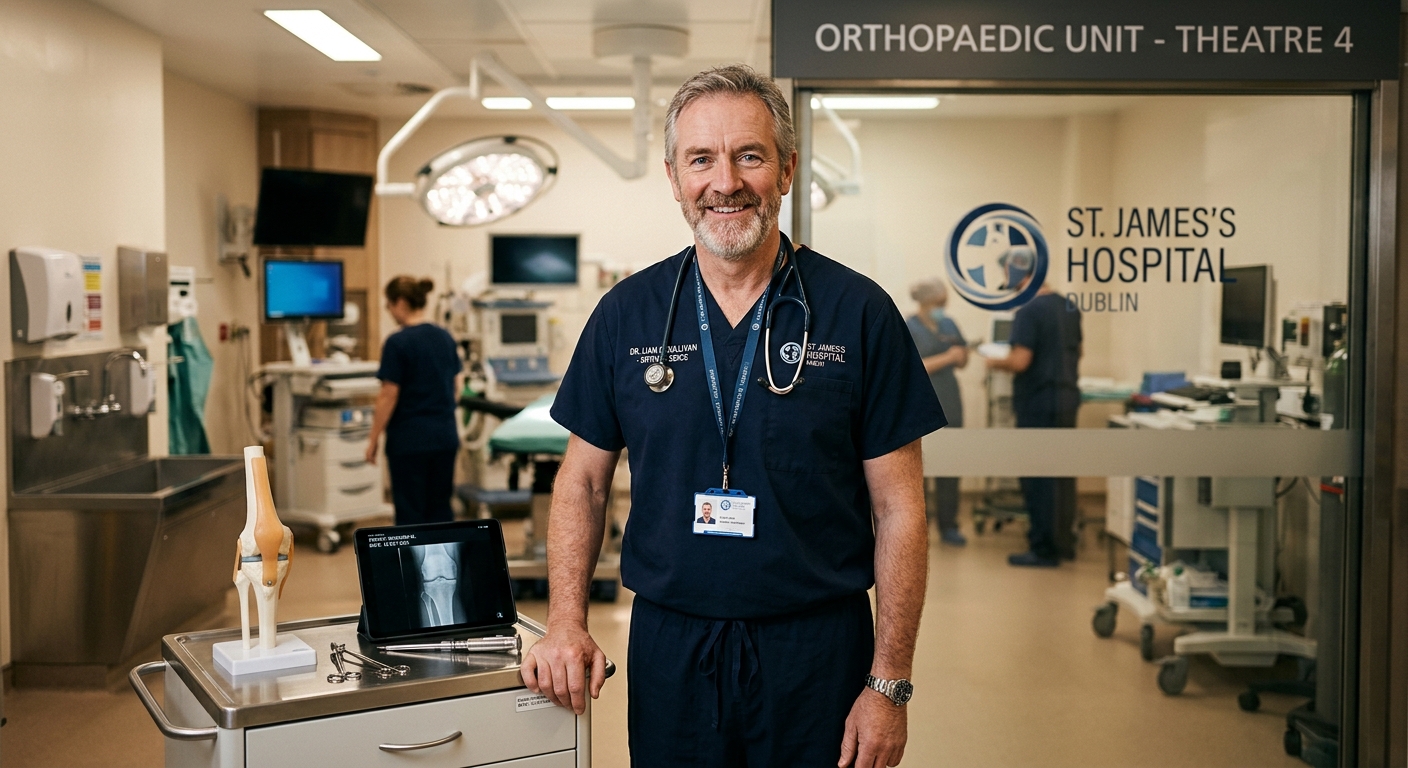
Consider a standard operating list for a consultant working out of the Bons Secours or Mater Private in Cork. A Tuesday theatre session might include a total hip arthroplasty, an anterior cruciate ligament (ACL) reconstruction, and two routine knee arthroscopies. The clinical execution of these procedures relies on years of highly specialised training and precision. However, once the patient is in recovery, the administrative reality of Irish private healthcare takes over. The consultant must dictate the operative notes, which are then transcribed by a medical secretary. Following transcription, the practice must manually cross-reference the surgical narrative against Aviva’s specific schedule of procedures to identify the correct billing codes.
This manual translation of clinical work into administrative data is fraught with friction. Orthopaedic surgery often involves secondary procedures performed during the same session—for example, a meniscal repair alongside an ACL reconstruction, or extensive chondroplasty during a routine arthroscopy. If the medical secretary, who is balancing phone calls, patient scheduling, and clinic preparation, misses a secondary procedure in the dictated note, the claim submitted to Aviva will be under-coded. The practice loses revenue for work that was genuinely performed. Conversely, if a code is applied that Aviva deems mutually exclusive to the primary procedure, the entire claim may be rejected, initiating a protracted appeals process.
The financial impact of these administrative bottlenecks extends beyond occasional lost revenue. According to reports from the Irish Medical Organisation (IMO), the escalating administrative burden in consultant practice is a primary driver of operational inefficiency. When a private orthopaedic surgeon Cork based has to spend their non-clinical hours reviewing rejected Aviva claims or rewriting discharge summaries to satisfy insurer queries, that time is directly subtracted from patient care or personal time.
Furthermore, the delay in revenue realisation affects practice cash flow. A manual billing cycle—dictation, transcription, coding, patient signature collection, and postal or legacy-portal submission—often means an Aviva claim is not processed until weeks after the patient has been discharged. If Aviva requests further clarification regarding the medical necessity of an MRI prior to surgery, or queries the length of the inpatient stay, the payment cycle is delayed further. For a solo consultant or a small group practice managing overheads, clinic rentals, and staff salaries, these 45-day payment delays create unnecessary financial friction.
 ▶ Watch on YouTube
How Automation Streamlines the Aviva Claims Cycle
Automation streamlines the Aviva claims cycle by extracting procedure codes directly from clinical notes, generating compliant invoices, and submitting them electronically without manual data entry. This reduces the time from surgical discharge to claim submission from weeks to minutes, minimising human error and accelerating the payment timeline for consultants.
The transition from a manual workflow to an automated, AI-assisted system fundamentally changes the role of the medical secretary. Rather than acting as a data-entry clerk who types out dictations and manually searches for billing codes, the secretary becomes an exceptions handler and a reviewer. Modern practice management systems utilise natural language processing (NLP) to interpret the unstructured text of an operative note or a clinic letter.
When a consultant dictates a complex surgical note, an AI agent like Brigid operates strictly with a human-in-the-loop model. The software reads the transcribed text, identifies the anatomical sites, the surgical techniques used, and the implants placed. It then drafts the corresponding Aviva billing codes and prepares the claim. Importantly, the AI does not autonomously submit the claim or make clinical decisions. The consultant or the designated practice manager reviews the drafted claim, verifies the codes against the clinical reality, and signs off. This ensures full compliance while removing the tedious manual search process.
To illustrate the structural difference between these two approaches, consider the following comparison of the billing lifecycle for a standard inpatient procedure:
| Billing Phase | Traditional Manual Workflow | Automated AI Workflow |
|---|---|---|
| Documentation | Consultant dictates note; secretary transcribes (24-48 hour delay). | Voice-to-text captures note instantly; AI structures the data. |
| Code Extraction | Secretary manually searches Aviva schedule for matching procedure codes. | System drafts Aviva codes based on clinical entities in the text. |
| Verification | Consultant reviews paper file, corrects errors, returns to secretary. | Consultant reviews digital draft, approves with one click. |
| Submission | Data entered into legacy portal or posted. High risk of transcription error. | Direct electronic submission to insurer via API or secure gateway. |
| Payment Cycle | Typically 30-45 days, pending manual query resolution. | Often reduced to 7-14 days due to clean, error-free initial submission. |
By implementing this automated framework, a practice operating across multiple sites in Cork can consolidate its billing operations. The software handles the formatting requirements specific to Aviva, ensuring that all mandatory fields—such as the referring GP’s details, the date of initial consultation, and the specific hospital facility code—are populated correctly before the claim is ever submitted. This proactive error-catching prevents the frustrating scenario where a high-value surgical claim is rejected weeks later due to a missing administrative detail.

Reducing Coding Errors in Complex Orthopaedic Procedures
Complex orthopaedic procedures, such as multi-ligament reconstructions or revision arthroplasties, are highly susceptible to coding errors under manual systems. AI-assisted coding cross-references operative notes against Aviva’s specific procedural schedules, ensuring accurate capture of primary procedures, secondary interventions, and specific implants, drastically reducing the rate of rejected or underpaid claims.
Orthopaedics is arguably one of the most complex surgical specialties when it comes to clinical coding. Unlike simpler procedural specialties where one diagnosis typically equals one intervention, orthopaedic surgery frequently involves layered procedures. A revision total knee replacement, for instance, is not a single action. It involves the removal of existing hardware, extensive debridement, potential bone grafting, and the insertion of a new, often modular, implant system. The operative note generated by the consultant will detail each of these steps meticulously, as required by the Royal College of Surgeons in Ireland (RCSI) standards for clinical documentation.
When billing Aviva for such a case, the practice must accurately distinguish between the primary procedure (which commands the full scheduled fee) and any secondary procedures (which may be paid at a reduced percentage, or bundled into the primary code depending on the insurer's specific rules for that year). Manual coders, no matter how experienced, can struggle to keep pace with the annual changes to insurer schedules. If a secondary procedure is incorrectly coded as a standalone primary procedure, Aviva’s automated claims processing system will flag the discrepancy and reject the claim.
Automated practice management software mitigates this risk by maintaining an up-to-date, digitised database of Aviva’s procedural rules. When the AI reads the operative note for the revision knee surgery, it maps the clinical text to the current billing rules. It understands that 'removal of hardware' in the context of a 'revision arthroplasty' is often a bundled code, but that a 'structural bone graft' might warrant an additional specific code. It presents these drafted codes to the consultant for final review.
This level of precision is equally critical in trauma orthopaedics. Managing fractures often involves deciding between open reduction and internal fixation (ORIF), closed reduction, or external fixation, sometimes transitioning from one to another during the same admission. Capturing the exact nature of the fixation and the specific anatomical site (e.g., distal radius vs. scaphoid) is essential for accurate Aviva reimbursement. By relying on software that reads the consultant's exact dictated terminology, the practice ensures that the complexity of the surgical work is accurately reflected in the final invoice.
How Patient-Led Portals Improve Pre-Authorisation Accuracy
Patient-led portals improve pre-authorisation accuracy by shifting demographic and policy data entry directly to the patient before their clinic visit. When patients input their own Aviva policy numbers and intake details, transcription errors are eliminated, ensuring the practice submits pre-authorisation requests based on verified, accurate information directly from the source.
A significant percentage of Aviva claim rejections in private practice do not stem from clinical coding errors, but from basic administrative inaccuracies at the point of patient intake. A misspelled surname, an outdated address, or, most commonly, an incorrect or expired health insurance policy number will cause an immediate rejection when the pre-authorisation request is submitted. In a traditional workflow, a patient verbally provides these details over the phone, or writes them on a paper form in the waiting room, which the secretary then types into the local database. Each step in this chain introduces the potential for human error.
Shifting this responsibility to the patient fundamentally improves data integrity. Through a companion patient app like MeetBrigid, patients take control of their own administrative intake. The platform allows patients to book their appointments, pay their consultation bills from their phone, and complete comprehensive intake forms online before they ever arrive at the clinic. They can also securely view their results, letters, and documents—provided the consultant has deliberately shared them.
Crucially, one patient account can connect to multiple clinics. The patient chooses exactly what demographic and insurance information to share, and with whom. When a patient inputs their Aviva policy number, plan name, and renewal date directly into their own device, and grants the orthopaedic practice access to that data, the risk of a secretary mishearing a digit over a poor phone connection is eliminated. The practice receives the exact data the patient provided.
This patient-led approach has immediate knock-on benefits for the practice's pre-authorisation workflow. When the consultant decides that an MRI or a surgical intervention is required, the secretary initiates the Aviva pre-authorisation process using data that is already verified. There is no need to call the patient back to confirm their policy suffix or to ask if they have served their waiting periods for a pre-existing condition. The data is already structured and ready for submission.
Furthermore, this methodology aligns closely with the principles of data minimisation and accuracy outlined by the Data Protection Commission (DPC) under GDPR. By allowing the patient to manage and update their own personal data, the practice ensures its records remain accurate and compliant, reducing the administrative overhead associated with manual data auditing.
Transitioning Your Cork Practice to Automated Billing in 2026
Transitioning a Cork orthopaedic practice to automated billing requires an initial audit of current Aviva claim rejection rates, followed by the phased implementation of an AI-driven practice management system. Consultants should run parallel billing cycles for two weeks to verify coding accuracy before fully migrating their administrative workflow to the new software.
Moving away from legacy, paper-heavy systems can seem daunting for an established private orthopaedic surgeon Cork based, particularly when managing busy lists across multiple private hospitals. However, the transition to modern practice management software is highly structured and can typically be executed with minimal disruption to clinical care. The goal is to implement the technology systematically, ensuring that both the consultant and the administrative staff are confident in the new workflows before fully retiring the old processes.
To ensure a smooth migration, practices should follow a structured deployment plan:
- Conduct a Billing Audit: Before implementing new software, evaluate your practice's current performance. Pull a report of all Aviva claims submitted over the past 90 days. Identify the percentage of claims that were rejected, the average time taken to resolve those rejections, and the primary reasons for the errors (e.g., coding mismatches, incorrect policy numbers, missing GP referral dates). This provides a baseline against which to measure the success of the new system.
- Select the Right Platform: Not all software is designed to handle the nuances of Irish private healthcare billing. Ensure the chosen platform specifically supports Aviva, VHI, Laya, and Irish Life schedules, and includes comprehensive clinical dictation capabilities. For a detailed analysis of available systems, consult our guide on the Best Practice Management Software Ireland 2026: Complete Comparison.
- Execute a Parallel Run: Once the software is installed (which typically takes less than 48 hours for cloud-based systems), do not immediately switch off your legacy billing process. For a period of two weeks, have the AI draft the Aviva claims based on your dictated notes, but have your secretary manually verify these drafts against your traditional coding methods. This builds trust in the system’s accuracy and highlights any specific orthopaedic procedures that may require custom templates.
- Standardise Patient Intake: Roll out the patient-led portal simultaneously. Instruct your secretarial team to direct all new patients to complete their registration and insurance details via the app prior to their first consultation. This immediately begins populating your database with clean, patient-verified Aviva data.
- Train for Exceptions Handling: Shift your administrative team's focus. Instead of spending hours typing dictations and searching for codes, train them to review the AI-drafted claims, manage the handful of complex exceptions that the system flags for human review, and focus on proactive patient communication.
The landscape of private medical billing in Ireland is shifting towards mandatory electronic submission and rigorous data validation. Practices that continue to rely on manual transcription and paper-based coding will face increasing delays in revenue collection and higher administrative overheads. By adopting automated workflows, orthopaedic consultants can reclaim hours of non-clinical time, ensure accurate reimbursement for complex surgical interventions, and provide a more modern, streamlined experience for their patients.
If your practice operates across multiple insurers, the benefits of automation compound significantly. You can explore similar strategies for other providers in our guide: Private Orthopaedic Surgeon Cork: Automating Laya Claims in 2026.
Next Step: Review your last month of Aviva remittance advices. Identify the top three reasons for claim queries or rejections, and calculate the administrative time spent resolving them. If manual data entry or coding errors are the primary cause, it is time to evaluate an automated solution.
MedProAI offers a 7-day free trial for Irish practices, with transparent pricing and a 48-hour setup process. Visit auth.medproai.com to try it.
Frequently asked questions about private orthopaedic surgeon Cork
How does automating Aviva billing benefit a private orthopaedic surgeon in Cork?
Automation reduces manual data entry errors and accelerates the submission process, helping Cork consultants secure faster claim reconciliation from Aviva.
Can patient-led apps like MeetBrigid assist with the billing workflow?
Yes, by allowing patients to securely manage and share their own insurance details and pre-authorisation codes directly with the clinic, reducing administrative overhead.
What is the best way to handle complex orthopaedic procedure codes for Aviva claims?
Using modern practice systems with built-in, up-to-date Irish health insurance code validation ensures complex multi-code claims are submitted accurately the first time.
Frequently Asked Questions
Ready to give Brigid the admin?
Request early access — founding practices are onboarding now. Or book a 30-minute walkthrough with our team to see Brigid run a workflow with your own data.
EU-hosted · GDPR · Founding-partner access · Cancel any time