Private Urologist Dublin: Automate VHI Pre-Auth in 2026
Streamline your Dublin urology practice. Learn how automated VHI pre-authorisation reduces claim rejections and saves hours of clinical admin time.

Built in Dublin · GDPR · 7-day trial
MedPro saves Irish clinicians 9–18 hrs every week.
The VHI Pre-Authorisation Bottleneck in Private Urology
The VHI pre-authorisation bottleneck is the manual, time-consuming process where practice staff must verify a patient's insurance cover for specific urological procedures. This administrative drag, involving phone calls and forms, directly delays scheduling surgical procedures and consumes significant secretarial resources that could be allocated to patient-facing tasks.
For a busy consultant urologist's practice, this bottleneck is a constant source of friction. Each patient scheduled for a procedure, whether a cystoscopy, TURP, prostate biopsy, or a more complex robotic-assisted radical prostatectomy, requires their VHI policy to be checked against the specific procedure code. This is not a simple yes/no query. Different plans offer varying levels of cover, have different excess amounts, and may have specific pre-conditions for approval. A medical secretary can spend 20-40 minutes per patient navigating VHI's consultant portals or phone systems to secure this confirmation.
This manual process is prone to error and creates a significant time lag. If a secretary is managing a full clinic list, pre-authorisation requests can stack up, leading to a delay of several days between the patient's consultation and the practice being able to formally schedule their procedure. This inefficiency impacts practice revenue flow, but more critically, it extends the patient's waiting time and introduces uncertainty at a stressful point in their care pathway. The administrative burden is a direct tax on the efficiency of the practice.
 ▶ Watch on YouTube
How Manual Insurance Verification Delays Dublin Theatre Lists
Manual insurance verification creates a direct delay between a consultant’s decision to operate and securing a theatre slot at a Dublin private hospital. Practices must wait for confirmation of cover before committing to a date at facilities like the Mater Private, Blackrock Clinic, or the Hermitage Clinic, leading to scheduling uncertainty and inefficient use of valuable theatre time.
The standard sequence of events is linear and fragile. A patient is seen in clinic and listed for a procedure. The medical secretary then begins the pre-authorisation process with VHI. Only upon receiving written confirmation of cover can they confidently contact the hospital's theatre booking coordinator. If the insurer has a query or the secretary is managing a high volume of requests, this can add days or even weeks to the timeline. During this period, available theatre slots can be taken by other surgeons, pushing your patient further down the list.
This delay has a cascading effect on your entire waiting list, creating a backlog that is administrative, not clinical. It generates unnecessary inbound calls from anxious patients asking for updates and complicates the coordination of a consultant's schedule, particularly for those operating across multiple hospital sites. Automating this check breaks the dependency, allowing for near-instant verification and immediate, confident theatre booking. For a deeper look at the impact of such delays, our guide on optimising private theatre slots provides further context.
Pre-Authorisation Workflow: Before vs. After Automation
BEFORE: Manual Process
- Day 1: Patient consultation; decision to operate.
- Day 1-3: Secretary manually submits pre-auth request to VHI via portal or phone.
- Day 3-7: Waiting period for VHI response. Potential for follow-up calls.
- Day 8: Approval received. Secretary contacts hospital to book theatre.
- Result: ~1-week delay, significant secretarial time, scheduling uncertainty.
AFTER: Automated Process
- Day 1: Patient consultation; decision to operate.
- Day 1 (minutes later): System automatically triggers pre-auth request with required data.
- Day 1-2: System receives automated approval or flags an exception for review.
- Day 2: Secretary books theatre slot, confident in coverage.
- Result: 24-48 hour turnaround, minimal staff input, immediate scheduling.

Step-by-Step: Implementing VHI Pre-Auth Automation in 2026
Implementing pre-authorisation automation involves four key phases: auditing current workflows, selecting a compatible practice management system, configuring rule-based triggers for specific urological procedure codes, and training staff on the new exception-handling process. This transition can be systematically managed and executed within a single business quarter.
This is not a technical overhaul but a process refinement project. The goal is to move your practice from a state of manual, repetitive work to one of 'management by exception', where human expertise is reserved for the complex cases that automation cannot handle.
Phase 1: Workflow Audit & Data Mapping (Time: 1-2 Weeks)
Before any system is introduced, you must first understand your current process in granular detail.
- Document the Process: Ask your medical secretary to map every single step, click, and phone call involved in getting a pre-authorisation for your top five most common procedures (e.g., flexible cystoscopy, UroLift, TURP, prostate biopsy, vasectomy).
- List Procedure Codes: Create a definitive list of all surgical procedure codes your practice uses.
- Map Insurer Requirements: Against each code, note the specific requirements for VHI, Laya Healthcare, and Irish Life Health. Note which ones are consistently approved versus those that frequently require additional clinical notes. According to the Health Insurance Authority's 2022 market report, these three insurers represent over 90% of the private market, making them the priority. Source: HIA Annual Report 2022.
Phase 2: System Selection & Integration (Time: 2-4 Weeks)
Your existing practice management software (PMS) may not support the necessary integrations. The key capability to look for is a system with modern, API-driven connections to insurers, rather than one that simply stores patient information. Platforms like MedProAI are built with this interoperability in mind, but the principle is universal: the software must be able to communicate programmatically with the insurer's system.
During evaluation, ask potential vendors two critical questions:
- "Can your system trigger a VHI pre-authorisation request automatically based on a selected procedure code?"
- "How does the system receive the response, and how does it alert my staff to an approval versus a rejection or query?"
Phase 3: Configuration & Testing (Time: 4 Weeks)
Using the map from Phase 1, you or your new system provider will configure the business rules. This is the core of the automation.
- Rule Example: IF `Procedure = 'TURP (Code 52601)'` AND `Insurer = 'VHI'` THEN `Submit Pre-Auth Request Template A`.
- Data Fields: The system will be configured to pull necessary data (patient name, DOB, policy number, procedure code, consultant number) directly from the patient record to populate the request, eliminating manual data entry.
- Testing: Use anonymised or test patient data to run through every single procedure code. Confirm that the correct requests are being generated and that the system correctly interprets the responses.
Common Mistake: Focusing only on the 'happy path' (automatic approval). The most critical part of testing is ensuring the system correctly flags exceptions—rejections, requests for more information, or policy shortfalls—for human intervention. The goal is to automate the 80% of routine approvals to free up time for the 20% of complex cases.
Phase 4: Staff Training & Go-Live (Time: 2 Weeks)
The role of your medical secretary will shift from 'data entry clerk' to 'process manager'. Training should focus on the new workflow:
- Monitoring the automation dashboard.
- Managing the flagged exceptions queue.
- Understanding how to manually override the system when necessary.
- Communicating status to patients through the new system's tools.
Reducing Claim Rejections for Complex Urological Procedures
Automation reduces claim rejections by ensuring pre-authorisation is obtained correctly and completely *before* a procedure occurs. The system programmatically checks for required clinical information against insurer rules and submits it in the required format, eliminating the human error common in manual submissions for complex cases like robotic prostatectomy or brachytherapy.
A rejected claim is more than delayed revenue; it is a significant administrative burden, requiring hours of secretarial time to investigate, appeal, and resubmit. The root cause is often a simple mismatch between the information provided and the insurer's requirements. For example, a pre-authorisation request for a radical prostatectomy might be queried by VHI if it lacks the patient's latest PSA level, Gleason score, and clinical staging details. A secretary, working under pressure, might omit one of these data points.
An automated system mitigates this risk by design. When a complex procedure is selected, the system can be configured to present a checklist or automatically pull the required data fields from the electronic patient record. It enforces completeness. The submission is not sent until all required fields, as dictated by the insurer's business rules for that specific procedure, are populated. This transforms the pre-authorisation process from a memory test into a systematic, auditable workflow, directly improving your practice's claim acceptance rate and revenue cycle velocity.
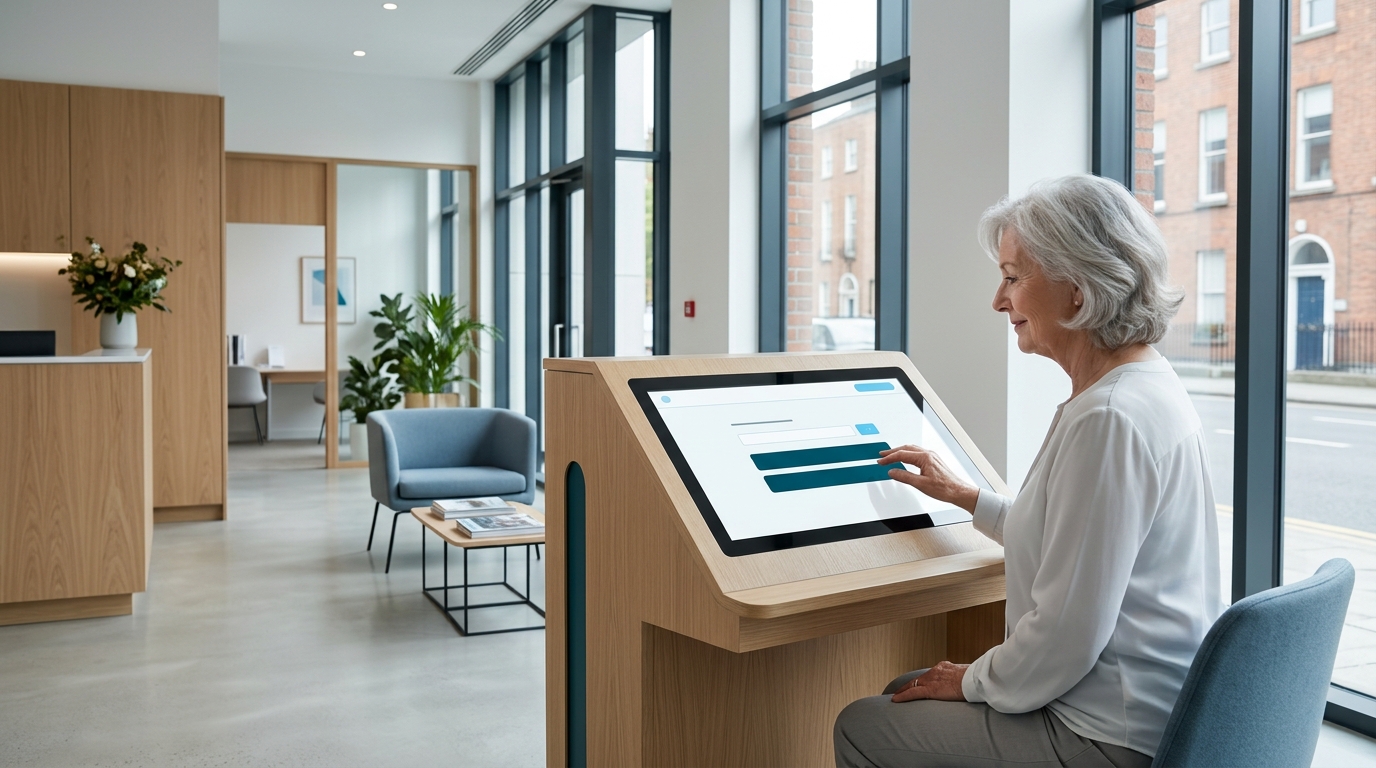
Empowering Patients: The Role of Self-Service Tech in Practice Admin
Patient-facing applications allow individuals to manage their own administrative tasks, such as uploading insurance details and completing pre-appointment health questionnaires. This approach shifts the data entry burden from practice staff to the patient, improving data accuracy and freeing up secretarial time for high-value clinical coordination and patient communication.
Consider the typical new patient journey. They call the practice, provide details over the phone, and the secretary transcribes their name, address, and VHI policy number. Each step is an opportunity for error. A patient-facing app or portal inverts this. The patient receives a link to register and enters their own information directly into the system. This is not about offloading work onto the patient; it is about empowering them and improving data quality at the source.
For a consultant urologist, this has tangible benefits. A patient using an app like MedYou can input their VHI details once, and that information is immediately and accurately available to the practice system to trigger the pre-authorisation workflow. This eliminates phone tag and transcription errors. Furthermore, it provides patients with a secure, transparent view of their administrative journey. They can see that their referral has been received, their appointment is confirmed, and their pre-authorisation is 'pending' or 'approved'—all without needing to call the practice. This dramatically reduces the inbound call volume, allowing your secretary to focus on managing theatre lists and coordinating complex care, a topic we explore further in our article on the multi-site patient experience.
Future-Proofing Your Dublin Urology Billing Workflow
Future-proofing your urology billing workflow means adopting a system that is continuously updated to reflect evolving insurer policies, fee schedules, and procedure codes. This requires a move from static, on-premise software to a cloud-based platform that manages these updates centrally, ensuring your practice remains compliant and financially optimised without manual intervention.
The private healthcare landscape in Ireland is not static. VHI, Laya, and Irish Life Health adjust their covered procedures, schedules of benefits, and submission rules annually. For a private urologist Dublin practice relying on manual processes or legacy software, keeping up is a significant, unbilled overhead for the practice manager or medical secretary. They must manually track these changes, update spreadsheets, and remember new rules, which is an unsustainable model.
A modern, cloud-based practice management system absorbs this complexity. The vendor is responsible for monitoring changes from major insurers. When VHI updates its schedule of benefits for urology, the platform is updated centrally. The new codes, rules, and fees are pushed out to all users simultaneously. This means your practice is always using the most current information for billing and pre-authorisation, minimising the risk of rejections or under-billing due to outdated data. This is a fundamental advantage of the Software-as-a-Service (SaaS) model over traditional software that requires periodic manual updates.
Recommended Review & Maintenance Schedule
Automation is not a 'set and forget' solution. It requires periodic oversight to ensure it remains effective.
- Monthly (30 mins): Your medical secretary should review the 'exceptions' log. This log details any pre-authorisation requests that were flagged by the system for manual review. Look for patterns. Is one specific procedure constantly being queried? This might indicate a need to adjust the data being sent in the automated request.
- Quarterly (1 hour): Conduct a brief review with your practice manager/secretary of the overall workflow. Analyse key metrics: average time from decision-to-operate to pre-auth approval, number of manual interventions required, and claim rejection rates. Compare these to the baseline data you collected in Phase 1.
- Annually (2 hours): In January, when most insurers have announced their changes for the year, conduct a strategic review. Confirm your system vendor has updated the platform for the new VHI, Laya, and Irish Life Health schedules. Re-evaluate your internal list of procedure codes and ensure they are still current, referencing guidance from bodies like the Royal College of Surgeons in Ireland (RCSI).
Your first step is not to evaluate software, but to quantify the problem. For one clinic week, ask your medical secretary to keep a simple log of the total time spent on the phone, on portals, and on paperwork related to VHI pre-authorisations. That number—the hours lost to administrative friction—is the foundation of the business case for change.
MedProAI's practice management platform is designed for Irish specialists to automate these workflows. MedProAI offers a 7-day free trial for Irish practices — visit auth.medproai.com to try it.
Frequently asked questions about private urologist Dublin
Why is VHI pre-authorisation particularly complex for private urologists in Dublin?
Urology often involves multi-stage procedures and specific consumable codes, which require precise documentation to match VHI's criteria and prevent delayed approvals.
How does automating the pre-auth process benefit my administrative staff?
Automation software cross-references procedure codes with VHI policy rules instantly, reducing the need for lengthy phone calls and manual data verification.
Can patients assist in streamlining the pre-authorisation and billing workflow?
Yes, by using patient-first apps like MedYou, patients can manage their own bookings, complete intake forms, and share their details directly with your clinic, minimizing administrative errors.
Does automation completely eliminate VHI claim rejections?
While it cannot eliminate them entirely, automation significantly reduces rejections by flagging mismatched codes and missing policy details before the claim is submitted.
Frequently Asked Questions
Ready to give Brigid the admin?
Start your 7-day free trial — no charge until day 7, full access. Or book a 20-min walkthrough with our team to see Brigid run a workflow with your own data.
EU-hosted · GDPR · No charge until day 7 · Cancel any time